Latest update August 26th, 2026 11:47 AM


Latest News
- Opposition Leader released on $100k bail following Demerara River standoff with police
- Guyana must build refinery to guard against global shocks
- Exxon resumes oil pumping at Liza Unity
- Suriname turns down Guyana offer of alternative ferry
- Family of 14 among Guyanese stranded in Suriname amid ferry service suspension
Indigenous lands are not reparations
Dear Editor,
During one of the Emancipation Day commemoration activities, Eric Phillips, the head of the local Reparations Committee, once again repeated the slander he has been making over the past decade that the Amerindian Act of 2006 was an act to give them reparations. And once again, I am forced to repeat that the Indigenous Peoples were not given lands on any “reparatory” basis. Land for the Indigenous Peoples was part and parcel of the Articles of our Independence from Britain which acknowledged, even by the one-sided positivistic international law they created, the rights of our Indigenous Peoples.
In 1965, the first Amerindian MP, Stephen Campbell accompanied the PNC delegation, headed by Forbes Burnham, to London to negotiate the terms of Guyana’s imminent independence. In the official Agreement for the Independence of Guyana, (Annex C) stipulated the independent government to provide legal ownership or rights of occupancy for Amerindians over: “areas and reservations or parts thereof, where any tribe or community of Amerindians is now ordinarily resident or settled and other legal rights, such as the rights of passage, in respect of any other lands they now by tradition or custom de facto enjoy freedoms and permissions corresponding to rights of that nature. In this context, it is intended that legal ownership shall comprise all rights normally attaching to such ownership.”
We cannot fail to point out that Amerindian land titling was subjected to extremely gratuitous attacks from members of the APNU/AFC administration, of which Eric Philips was an official of the State Asset Recovery Agency (SARA). Unlike the descendants of Columbus and most of those they colonised and hegemonised, the Indigenous Peoples view the land they occupy as sacred since they are sustained in every way through the crops they can grow, the animals they can hunt or fish, the shelters they can build, the cotton fabric they can cover their nakedness with and the herbs from the forest that provide medicines to cure their ailments.
When most Indigenous peoples refer to land, as one writer notes, “they do not mean a measurable or quantifiable extension of land, an object of geography and even less a commodity. (Land for them) exceeds the modern limit of reality in presence, it implies the past, heritage, memory. (It) has to be defended not for the sake of property but for the sake of protecting the ancestors, of preserving an origin that is both “past” and always already “present”. Like most modern man, our coastlanders can learn the true meaning of “environmental consciousness” from our Indigenous Peoples who have not been completely brainwashed as most of us are into believing the earth is to be raped and ravished.
The APNU/AFC government attempted to undermine – through stratagems such as attempting to subsume Amerindian Land Rights under a Commission of Inquiry into “African Ancestral Land Rights” and wild claims that some Indigenous peoples are not actually “indigenous” to Guyana – was the authoritative legal acknowledgement of Amerindian Land rights. Unlike what is being asserted by some individuals like Phillips, claiming to speak on behalf of African Guyanese, the lands to which Indigenous Peoples are been given title, are not “reparations” for any past actions of the departed European powers, but an acknowledgement of their unbroken rights over land to which they were spiritually and culturally connected. The Dutch, whose rights and responsibilities the British assumed, never conquered but made treaties with the Indigenous Peoples and offered them annual tributes. The land demarcated is not on the basis of Guyana assuming the debts of Britain as a successor state, but directly by the latter in Annex C.
By 1976, the Amerindian Act passed by the then PNC government to give effect to Annex C, resulted in some Amerindian villages obtaining title to their lands. But it was not until a new Amerindian Act was passed by the PPP government in 2006 that the full meaning of Annex C was given meaning. Unlike the allusions as to when any particular Amerindian Tribe arrived in Guyana, Art 60 (1) of the Act declares simply, “An Amerindian Community may apply in writing to the Minister for a grant of State lands provided – (a) it has been in existence for at least twenty-five years; (b) at the time of the application and for the immediately preceding five years, it comprised at least one hundred and fifty persons.”
Sincerely,
Ravi Dev
Share this:

Discover more from Kaieteur News
Subscribe to get the latest posts sent to your email.
Similar Articles
hits

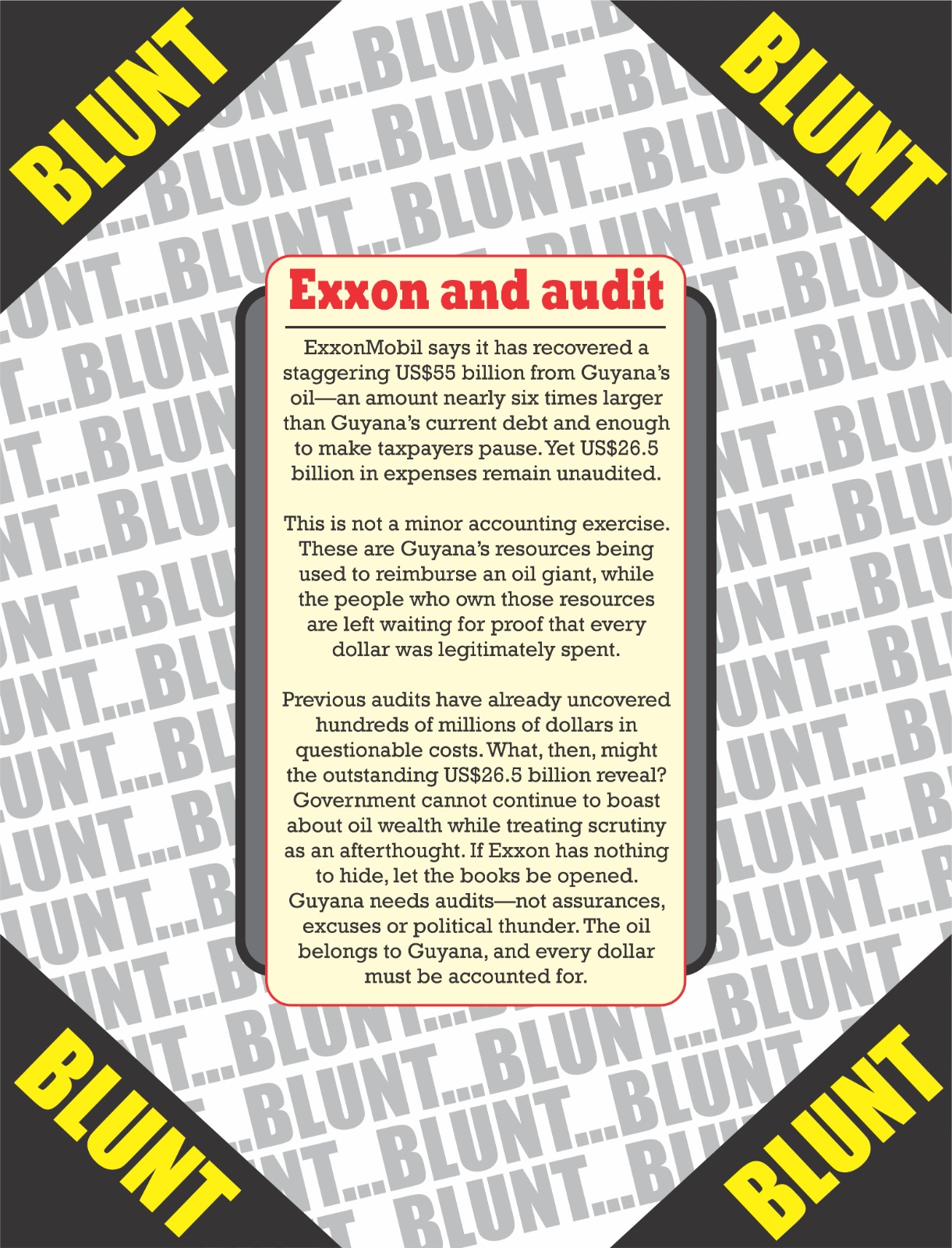
Blunt of the day
Sports

Features/Columnists

Sir. Ronald Sanders

The GHK Lall Column

Weekend Cartoon


