Latest update August 8th, 2026 12:30 AM



Latest News
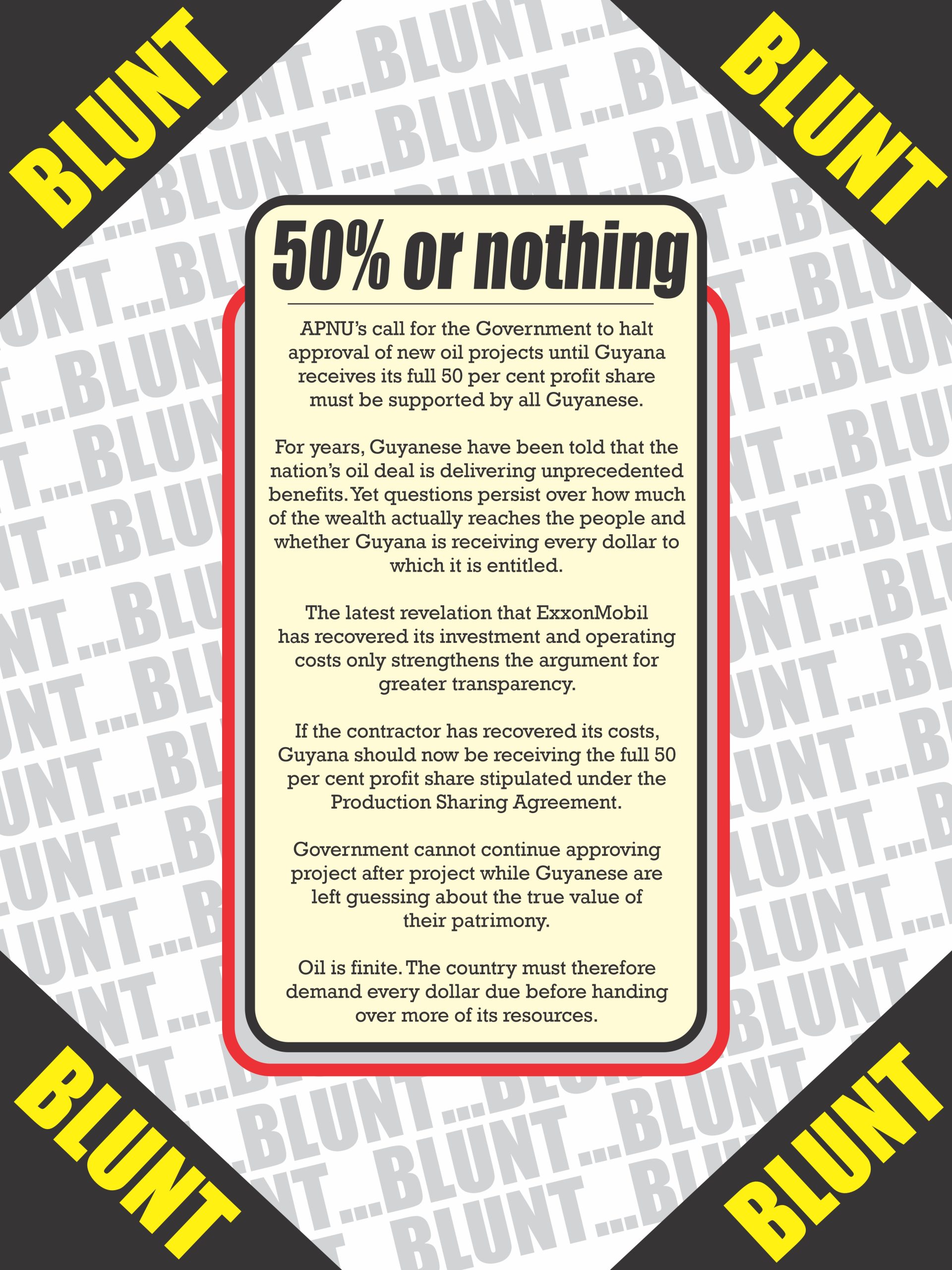
- ‘No new oil projects until Guyana gets full 50% profits’ – APNU tells Govt.
- Two dead in Water Street brawl
- “We will follow you wherever you go” – opposition vows to beef up protests against government
- Trump says war ‘can’t go much longer’
- Guyana’s oil helps cushion impacts from Middle East disruption – Exxon
The UN ILO launched World Day Against Child Labour
Today In History
Compiled By Zena Henry
Kaieteur News – Today marks 20 years since the United Nations’ International Labour Organisation (ILO) launched the World Day Against Child Labour to focus attention on the global extent of child labour and the action and efforts needed to eliminate it.
Each year, since 2002, on June 12, the World Day brings together governments, employers and workers’ organisations, civil society, as well as millions of people from around the world to highlight the plight of child labourers and what can be done to help them.
Under the 2022 theme: “Universal Social Protection to End Child Labour,” the World Day calls for increased investment in social protection systems and schemes to establish solid social protection floors and protect children from child labour. While significant progress has been made in reducing child labour over the last two decades, progress has slowed overtime, and it has even stalled during the period 2016-2020. Today, 160 million children are still engaged in child labour – some as young as five. Government social protection systems are essential to fight poverty and vulnerability, and eradicate and prevent child labour. Social protection is both a human right and a potent policy tool to prevent families from resorting to child labour in times of crisis. However, as of 2020 and before the COVID-19 crisis took hold, only 46.9 percent of the global population were effectively covered by at least one social protection benefit while the remaining 53.1 per cent – as many as 4.1 billion people – were left wholly unprotected. Coverage for children is even lower. Nearly three quarters of children, 1.5 billion, lacked social protection. Significant progress towards ending child labour requires increased investment in universal social protection systems, as part of an integrated and comprehensive approach to tackle the problem.
Nelson Mandela was sentenced to life in prison
South African anti-apartheid activist, Nelson Mandela spent 27 years in prison. In 1993, he received the Nobel Peace Prize and one year later he became President of South Africa. On June 12, 1964, Nelson Mandela and seven of his comrades were jailed for life in what became known as the Rivonia Trial. Mandela, Ahmed Kathrada, Walter Sisulu, Elias Motsoaledi, Andrew Mlangeni, Govan Mbeki, Raymond Mhlaba and Denis Goldberg were convicted of sabotage on June 11 by Judge Quartus de Wet. The next day, all but Denis Goldberg, who was the only White person convicted in the case, were shackled and flown to Robben Island Maximum Security Prison. Because apartheid rules applied also to prisoners, he was held in Pretoria Central Prison, where he spent the next 21 years.

A global hero, Nelson Mandela stood up for what he believed in (NPR.org photo)
As they entered the court room at the Palace of Justice in Pretoria on June 12, 1964, all the accused were prepared to be sentenced to death. Mandela had decided to give a statement from the dock instead of testifying. These now famous words ended his more than four-hour long speech to mark the opening of the defence case on April 20, 1964:
“During my lifetime I have dedicated myself to this struggle of the African people. I have fought against White domination, and I have fought against Black domination. I have cherished the ideal of a democratic and free society in which all persons live together in harmony and with equal opportunities. It is an ideal which I hope to live for and to achieve. But if needs be, it is an ideal for which I am prepared to die.” Mandela used his speech from the dock in the Rivonia Trial to outline the history of racial oppression in South Africa and to explain how the African National Congress had tried every available method of peaceful protest before deciding to turn to the armed struggle.
Mandela and his followers were fighting against apartheid, a system of White supremacy in South Africa. Under apartheid, everyone was put into one of four racial categories: “White/European,” “Black,” “coloured,” or “Indian/Asian.” Non‐White South Africans were second‐class citizens with little or no political power. Restrictive laws governed every aspect of people’s lives, dictating where they could live, work and travel and restricting their access to education, health care and other social services. Mandela had risen up against apartheid and called upon all South Africans to join him.
Mandela was held on Robben Island until March 1982, when he was moved to Pollsmoor Prison in Cape Town. In 1988, when he contracted tuberculosis, he was treated at Tygerberg Hospital in Bellville and then at Constantiaberg Medi-Clinic until he was moved to Victor Verster Prison in Paarl. On February 11, 1990, Mandela walked through the gates of Victor Verster Prison a free man. Amid growing domestic and international pressure and fears of racial civil war, President F. W. de Klerk released Mandela. Mandela died on December 5, 2013. (Excerpts from NelsonMandela.org)
President Reagan’s “Tear down this [Berlin] wall” speech marked new turn in cold war
On June 12, 1987, American President Ronald Reagan stood just 100 yards away from the concrete barrier dividing East and West Berlin and uttered some of the most unforgettable words of his presidency: “Mr. Gorbachev, tear down this wall.” By the time Reagan travelled to Berlin, Germany, to commemorate the 750th anniversary of the city’s founding, the Berlin Wall had divided the city in half for nearly 26 years. Built, and officially closed on August 12, 1961, to prevent disaffected East Germans from fleeing the relative deprivations of life in their country for greater freedom and opportunity in the West, the wall was more than just a physical barrier. It also stood as a vivid symbol of the battle between communism and democracy that divided Berlin, Germany and the entire European continent during the Cold War.

East and West German people celebrate the end of the cold war on top of the Berlin Wall, 10 November 1989. Photograph: Peter Horvath/REX/Shutterstock (Photo Credit: The Guardian)
The wall’s origins traced back to the years after World War II, when the Soviet Union and its Western allies carved Germany into two zones of influence that would become two separate countries, respectively: the German Democratic Republic (East Germany) and the Federal Republic of Germany (West Germany). Located deep within Soviet-controlled East Germany, the capital city of Berlin was also split in two. Over the next decade or so, some 2.5 million East Germans—including many skilled workers, intellectuals and professionals—used the capital as the primary route to flee the country, especially after the border between East and West Germany was officially sealed in 1952.
Seeking to stop this mass exodus, the East German government closed off passage between the two Berlins during the night of August 12, 1961. What began as a barbed wire fence, policed by armed guards, was soon fortified with concrete and guard towers, completely encircling West Berlin and separating Berliners on both sides from their families, jobs and the lives they had known before. Over the next 28 years, thousands of people would risk their lives to escape East Germany over the Berlin Wall, and some 140 were killed in the attempt. The Berlin wall was dismantled in 1989, but some observers have registered doubt that Reagan’s famous catchphrase actually impacted the decision. (Excerpts from History)

June 12, 1994: At 11:45 a.m., Boeing test pilots John E. Cashman and Kenny Higgins took the first Boeing 777-200 airliner, line number WA001, FAA registration N7771, on its first flight (Photo Credit: This day in aviation photo)
The world’s largest twin jet, Boeing 777, took flight for the first timeWhen the Boeing 777 was developed, it sought to fill the gap between the company’s sister crafts 767 and the 747. By the 1980s, Boeing had developed a solid lineup of aircraft. The Boeing 737 had become the dominant short-haul aircraft, and it offered a range of longer-range aircraft – the 757, 767, and the 747. It was the world’s largest twin-engine jet at the time and was developed in consultation with eight major airlines. The programme was launched on October 14, 1990, with the first order from United Airlines. The prototype was rolled out on April 9, 1994. On June 12, 1994, the world’s largest twin-engine jet took off on its maiden flight. The 777 entered service with the launch customer, United Airlines, on June 7, 1995.
The Boeing 777 can accommodate a ten–abreast seating layout and has a typical 3-class capacity of 301 to 368 passengers, with a range of 5,240 to 8,555 nautical miles (9,700 to 15,840 km). It is recognisable for its large-diametre turbofan engines, six wheels on each main landing gear, fully circular fuselage cross-section, and a blade-shaped tail cone. The 777 is said to have been ordered and delivered more than any other wide-body airliner. As of April 2022, more than 60 customers had placed orders for 2,108 aircraft of all variants, with 1,683 delivered. The Boeing 777 as of January 2022, has been overshadowed by the new Boeing 777X, now the world’s largest twin-engine jet. This model will not be available for delivery until 2025.
Share this:

Discover more from Kaieteur News
Subscribe to get the latest posts sent to your email.
Similar Articles

Blunt of the day
Sports

Features/Columnists

Sir. Ronald Sanders

The GHK Lall Column

Weekend Cartoon