Latest update September 12th, 2026 10:20 AM


Latest News
New LCDS talks up mangrove restoration
…promises improved forest, eco-system conservation in Guyana’s climate change fight
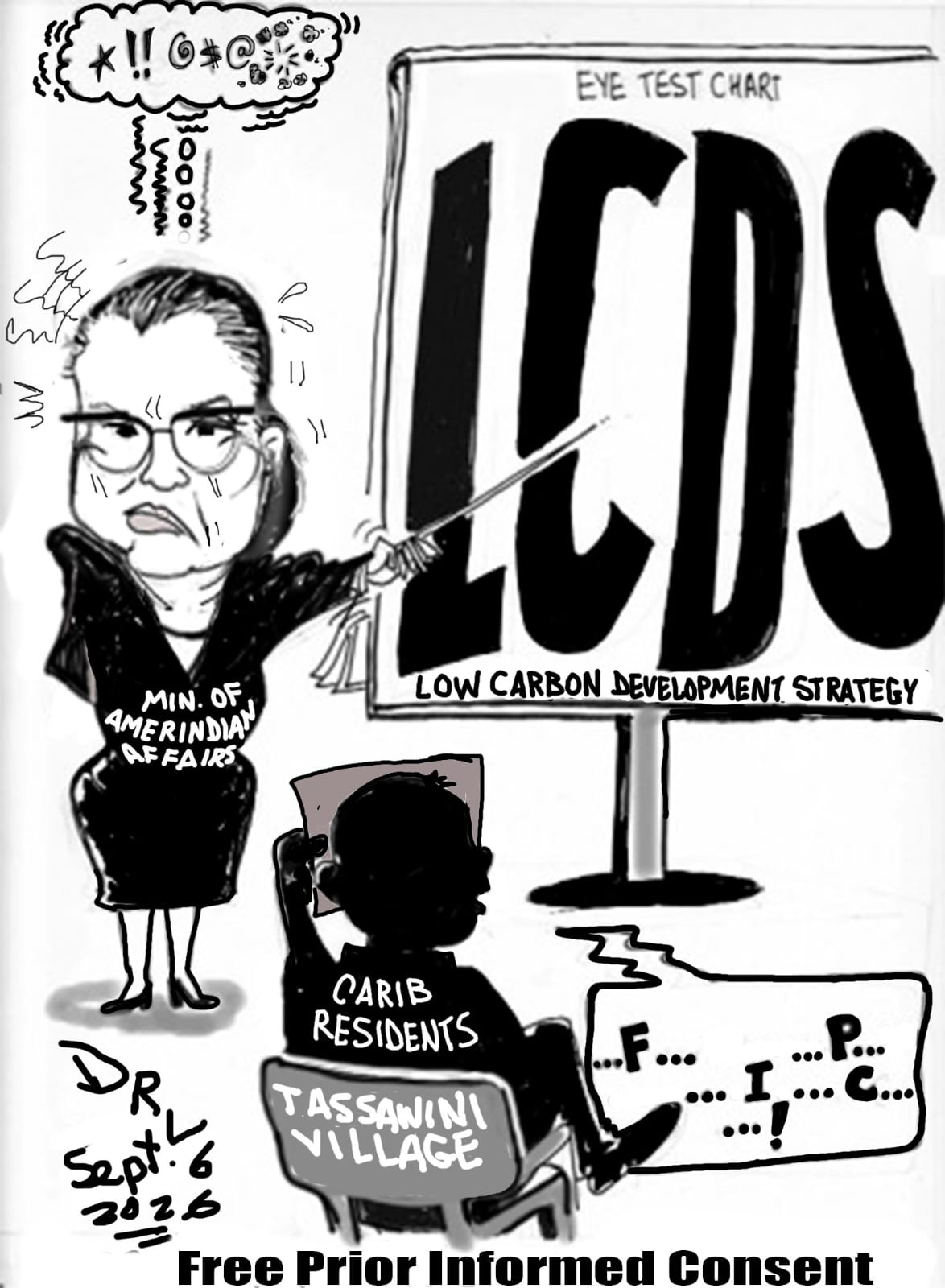
Kaieteur News – The restoration of mangrove swamps (mangroves), conservation of the forests as well as the eco-systems are all essential to helping Guyana achieve its 2030 Low Carbon Development Strategy (LCDS) and ultimate Climate Change goals.
This is outlined in the draft copy of Guyana’s proposed LCDS for 2030. The document which was released to the public for consultation last month, proposes a version of Guyana’s LCDS that builds on both the insights gained during the national consultation as well as on the progress made within the international framework for Reducing Emissions from Deforestation and Forest Degradation (REDD+).
It sets out how Guyana can provide the world with a working example of how immediate action can stimulate the creation of a low-deforestation, low-carbon, climate-resilient economy. The document notes, in this regard, that Guyana‘s mangroves play a special role in the LCDS.

An aerial view of Guyana ‘s mangrove plantation along the coastal belt.
The document specifies that in addition to providing a number of important services that range from the protection of the country’s coastal plain, to supporting biodiversity habitats, mangroves provide an important function in sequestering significant amounts of carbon, designated ‘Blue Carbon4’, which is of particular importance to the REDD+ programme.
However, despite covering 0.7% of total land area and having an estimated value of $1.6 billion annually on global level, it notes that “mangrove deforestation accounts for an estimated 10% of emissions worldwide.”
As a result, the data states that blue carbon ecosystems produced by mangroves are an important resource to be protected, expanded and or restored. In Guyana, there have been significant strides in the protection of mangroves through the Mangrove Restoration Project. This project allowed for the establishment of national administrative capacity to manage mangroves in Guyana and focused efforts on mangrove restoration, community-based mangrove management as well as public awareness.
As such, towards achieving its 2030 goals, the document noted that Guyana will intensify efforts at mangrove restoration and management. According to the document, the LCDS seeks to further explore the blue carbon potential in Guyana, focusing on Guyana’s mangroves in the initial stages. To this end, the expansion and restoration of mangrove forests in Guyana is a planned outcome.
In the interim, the LCDS 2030 draft proposal notes that mangroves plays a key role in Guyana‘s coastal protection. The data points specifically to the ability of mangroves to form a resilient green infrastructure that serves as the foundation of an entire, highly productive ecosystem.
As such, the document explained that “…While their [mangroves] unique roots capture and consolidate soil, they become critical nurseries for commercially and ecologically important marine life, and their tangles of branches provide vital habitats for thousands of other species.”
It continued “… mangroves provide crucial protection from storm-surges, flooding and erosion… Their ability to sequester carbon and mitigate climate change, mangroves store as much as four times the carbon of an equal area of inland rainforest and most of it is in the soil, held fast by their roots. Increased mangrove cover will increase benefits for Guyana in the LCDS.”
In addition to the mangroves, the LCDS 2030 draft notes that conservation of forest carbon stock is also a key component of REDD+, with protected areas and other area-based conservation measures needed to achieve this. In this regard, the draft document noted that the establishment of protected areas is an important component of Guyana’s LCDS.
Guyana‘s Protected Areas Commission (PAC) was established in 2012 following the passage of the Protected Areas Act in 2011. The PAC has oversight of management of Guyana’s National Protected Areas System (NPAS), with responsibility for further expansion of the NPAS. Guyana’s NPAS, which currently comprises approximately 8.4% of Guyana’s land area, comprises a mix of urban and hinterland protected areas. These protected areas include the Iwokrama forest, Shell Beach Protected Area, Kanuku Mountains Protected Area, Kaieteur National Park and the Kanashen Community-owned Conservation Area; the urban parks include the National Park, Botanical Gardens, Zoological Park and Joe Vieira Park.
The role of the PAC includes monitoring and the regulation of resource use within Protected Areas (PAs); preparation and implementation of management plans; support to Amerindian preparation and implementation of management plans; associated with protected areas and public awareness and involvement.
Share this:

Discover more from Kaieteur News
Subscribe to get the latest posts sent to your email.
Similar Articles
Website Hits

Blunt of the day
Sports

Features/Columnists

Sir. Ronald Sanders

The GHK Lall Column

Weekend Cartoon