Latest update July 23rd, 2026 12:30 AM



Latest News
- MV Barima Disaster… Brazil, T&T come to Guyana’s rescue
- Govt. cannot investigate itself! – Amanza Walton
- Billions from oil, no safe passage for hinterland residents – MP Hastings on MV Barima tragedy
- Oil settles up more than 3% to six-week high as Mideast conflict threatens oil transit routes
- Opposition unites in call for Edghill to go
Unite the Diaspora and Guyanese at home to fight Corruption
DEAR EDITOR,
If corruption is allowed to grow in Guyana, it would deny life-changing benefits for the majority of workers, farmers, the unemployed, the poor and the marginalized, especially among women, youth and seniors.
The great scientist and humanist, Albert Einstein, warned humanity “the world will not be destroyed by those who do evil, but by those who watch them without doing anything.” If we are bystanders to corruption, most of us will become victims and accomplices in Guyana’s continuing underdevelopment.
To become effective hunters of corrupt activities, Guyanese at home and in the diaspora have to develop a closer partnership.
The diaspora, “Region 11,” is strategically located in major global centres like New York, Toronto and London. At least 550,000 persons are first generation, that is, they were born in Guyana. There is also a second generation, who are eligible for Guyanese citizenship because one of their parents was born in Guyana.
In addition to being citizens in their host country, many diaspora continue to be Guyanese citizens with deep and binding ties to Guyana. About 80 percent of the Guyanese diaspora lives in the USA and Canada, 12.4 percent lives in Latin America and the Caribbean (Trinidad and Tobago, Suriname, Barbados, Antigua and Barbuda, St. Lucia, St. Maarten, Aruba, Venezuela and Brazil), 5.9 percent lives in the United Kingdom and Northern Europe, and 1.7 percent lives in Australia, Asia and Southern Africa.
Every year, between two percent and four percent of Guyana’s population emigrates. The emigrants come from all ethnicities, classes, religions, genders and ages including teachers, nurses, students, doctors, academics, business people and skilled labourers. Compared to the size of its population, Guyana has the highest emigration rate and ‘brain drain’ (including 80 percent of University of Guyana (UG) graduates and at least 40 percent of graduates from secondary schools and technical institutes).
The diaspora has impressive skills and expertise in all levels of education, in health services, in business management and sales, in information and communications technology (IT), in hydro and solar energy, in agriculture, in construction, in mining, in environmental protection, in industrial engineering including in the oil and gas sector, and even in the political arenas of their countries of residence.
This means that the diaspora can contribute enormously to the rapid development of Guyana especially in key priority areas such as power generation, infrastructure, information and communications technology, construction, the environment and the oil and gas industries.
Thankfully, for over 50 years, Guyana is blessed with an unselfish diaspora that ‘gives back’ regularly for community development and poverty reduction, and by transferring knowledge and skills.
Hundreds of school alumni groups, hometown associations and religious organizations donate to schools in the communities where they received their primary and secondary education. Their support includes: school supplies; computers; learning materials; books for libraries; funds for repairing and upgrading school buildings; University of Guyana scholarships; and academic/teacher training exchanges.
Dozens of groups donate to healthcare. Their support includes: beds and medical equipment for hospitals and clinics; medical missions of doctors and nurses from the USA and Canada to rural and hinterland communities; training programmes for local doctors and nurses in maternal care, mental health and suicide prevention; and financial funds and medical expertise to the Georgetown Hospital for maintaining the Burn Unit and improving the Maternity Ward.
Hometown associations, religious organizations and other groups also give their time and money to support community projects, sports clubs, human rights programmes, disaster relief and cultural exchanges.
Most importantly, financial remittances total an annual average of sixty billion Guyana dollars (G$60 Billion); Guyanese-born diaspora tourists spend an annual average of thirty billion Guyana dollars (G$30 Billion); investors from the diaspora annually invest about fifty billion Guyana dollars (G$50 Billion) to set up businesses in the tourism, mining, agriculture, information and communications technology (IT) and the forestry sectors; diaspora in the USA, Canada and the Caribbean purchase fresh and processed food exports from Guyana that annually total about five hundred million Guyana dollars (G$500,000,000).
As Guyanese, we should follow the advice of Mahatma Gandhi: “we must be the change we want to see.” At home and in the diaspora, we have to empathise and “walk in each other’s shoes” by positively discussing our feelings and perceptions so that we can overcome any suspicions and resentment of each other, and move forward.
Many in the diaspora feel guilty about leaving the country and know that, while many Guyanese at home admire them, they feel they are resented, distrusted and seen as just ‘cash cows.’
On the other hand, many Guyanese at home feel that many persons from the diaspora want special privileges, ‘talk down’ to them, act like know-it-alls, see them as inefficient and under-qualified. They believe that some of the diaspora transfer illegal practices to Guyana.
The main challenges for the diaspora are how: [1] to better understand the real complexities in administering and governing under-developed countries; [2] to better coordinate and balance their support across Guyana for more equitable development in hinterland, rural and urban communities; [3] to involve many of the younger diaspora generation in the leadership of their organizations; and [4] to better unite the Guyanese diaspora communities by including all ethnicities, classes, genders and religions.
The next letter will explore what measures the diaspora and Guyanese at home could employ together to resist corruption.
Sincerely,
Geoffrey Da Silva
Share this:

Discover more from Kaieteur News
Subscribe to get the latest posts sent to your email.
Similar Articles

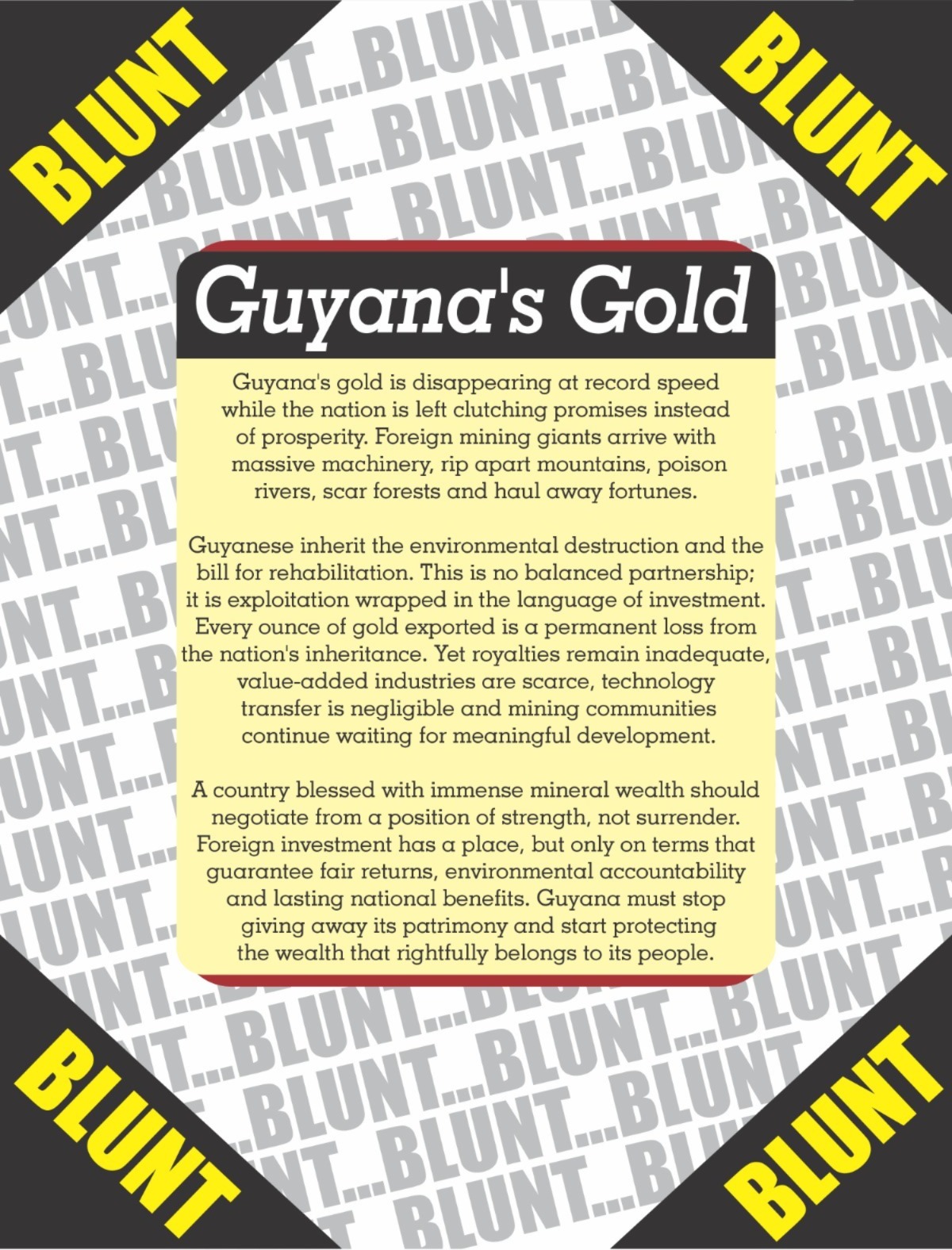
Blunt of the day
Sports
Features/Columnists

Sir. Ronald Sanders

The GHK Lall Column

Weekend Cartoon