Latest update September 21st, 2026 2:51 PM


Latest News
- Three killed in Baramita clash
- Defense accuses Police of misrepresenting court testimony, Magistrate says court unfazed by media
- Mohamed alleges political hand behind review of Justice Persaud’s U.S. visa
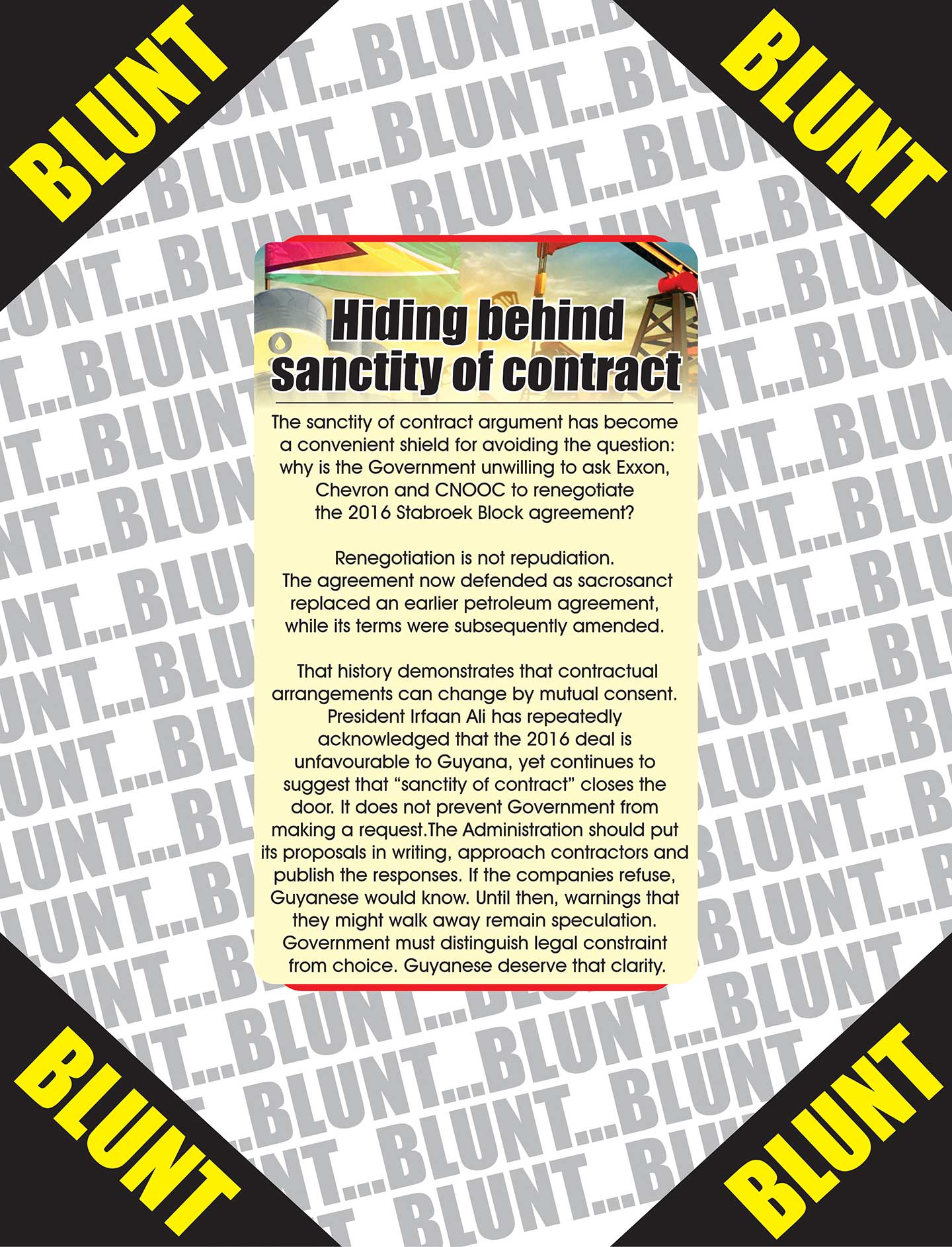
- ‘Stop blaming ‘sanctity of contract’ for keeping 2016 oil deal – Chris Ram tells Pres. Ali
- Iran and U.S. trade threats after Houthi attacks escalate regional conflict
The Ethnic Relations Commission is still trapped by an old and ineffective approach
Dear Editor,
The Ethnic Relations Commission announced last week its plan to host a national conversation on ethnic relations to, according to its press release, “have frank and open discussions to capture diverse views on factors that impede ethnic harmony and recommendations for the compilation of a report, to be submitted to the National Assembly and relevant stakeholders for implementation.” The event is slated for mid-December, will span two days, and will give face time to political leaders, youths, and local and overseas presenters. Following the horrific incidents in WCB a few months ago, the ERC was intensely criticized for doing too little too late. Most likely, the commission would think that its two-day national conversation is a robust response both to the WCB events and to its critics. The ERC would be wrong to so assume.
To be sure, Guyana needs a national conversation on fostering good ethnic relations, but mainly of a different sort from the ERC’s two-day talk shop. The main national conversation must instead occur at the community and inter-community levels. As the WCB incident showed (if further evidence was needed), it is at these levels that the fear, pain and suffering of bad ethnic relations play out. High-profile conferences in Georgetown, involving political leaders, dignitaries, and academics, reach only so far. The ERC would be badly mistaken should it believe that such talk shops should be its leading tool in fulfilling its vast constitutional mandate. The report from its December event, it is an easy bet to make, could essentially be written as early as today. We would have heard the speeches and recommendations before. And we can predict that any palliative value of such a conversation would quickly fade.
Guyana and the ERC must try something else, something more grassroots, more structured, and more durable. That “something else” must be a focus on working at the community and inter community levels. So convinced, I submitted to the ERC in September the following three recommendations: 1) the ERC should promote the mushrooming of grassroots community or inter-community ethnic relations initiatives. The objective here should be to get citizens themselves to create and execute programms or activities to foster ethnic harmony in their own spaces. Such initiatives could be encouraged through grants, awards, publicity, and technical advice; 2) the ERC should meet separately with all NDCs and respective village stakeholders across the country. Agenda items for such meetings should include (a) assessing the current state of ethnic relations within each community and between adjacent communities, (b) identification of any tension indicators or potential flash points, and (c) activating prevention measures as necessary. As my third recommendation to the ERC, I advised that it should adopt, flesh out, and promote the suggested alternatives to violent ethnic protests offered by its own commissioner, Pandit Deodat Persaud (https://www.inewsguyana.com/erc-commissioner-urges-alternatives-to-violent-protests/).
In closing, one should remind the ERC that building good ethnic relations (though important) is only one of its three constitutional mandates. Equally critical are its mandates involving (i) the detection, prevention, and elimination of ethnic discrimination, and (ii) the promotion of equality of opportunity regardless of ethnicity. These two mandates shift the focus away from inter-community and interpersonal relations towards the governmental systems and institutions that determine our life opportunities; who gets what, when or if at all. One senses that over the years, the ERC has mistakenly conflated these three connected but distinct mandates under the lone umbrella of good ethnic relations. These mandates should be unraveled and tackled separately.
The ERC needs to take stock of these and several other issues. It must at least begin by understanding that fulfilling its mission would demand far more than intermittent public appeals, national conferences, and culture shows.
Yours truly,
Sherwood Lowe
Share this:

Discover more from Kaieteur News
Subscribe to get the latest posts sent to your email.
Similar Articles
Website Hits

Blunt of the day
Sports

Features/Columnists

Sir. Ronald Sanders

The GHK Lall Column
Weekend Cartoon