Latest update September 19th, 2026 10:20 AM


Latest News
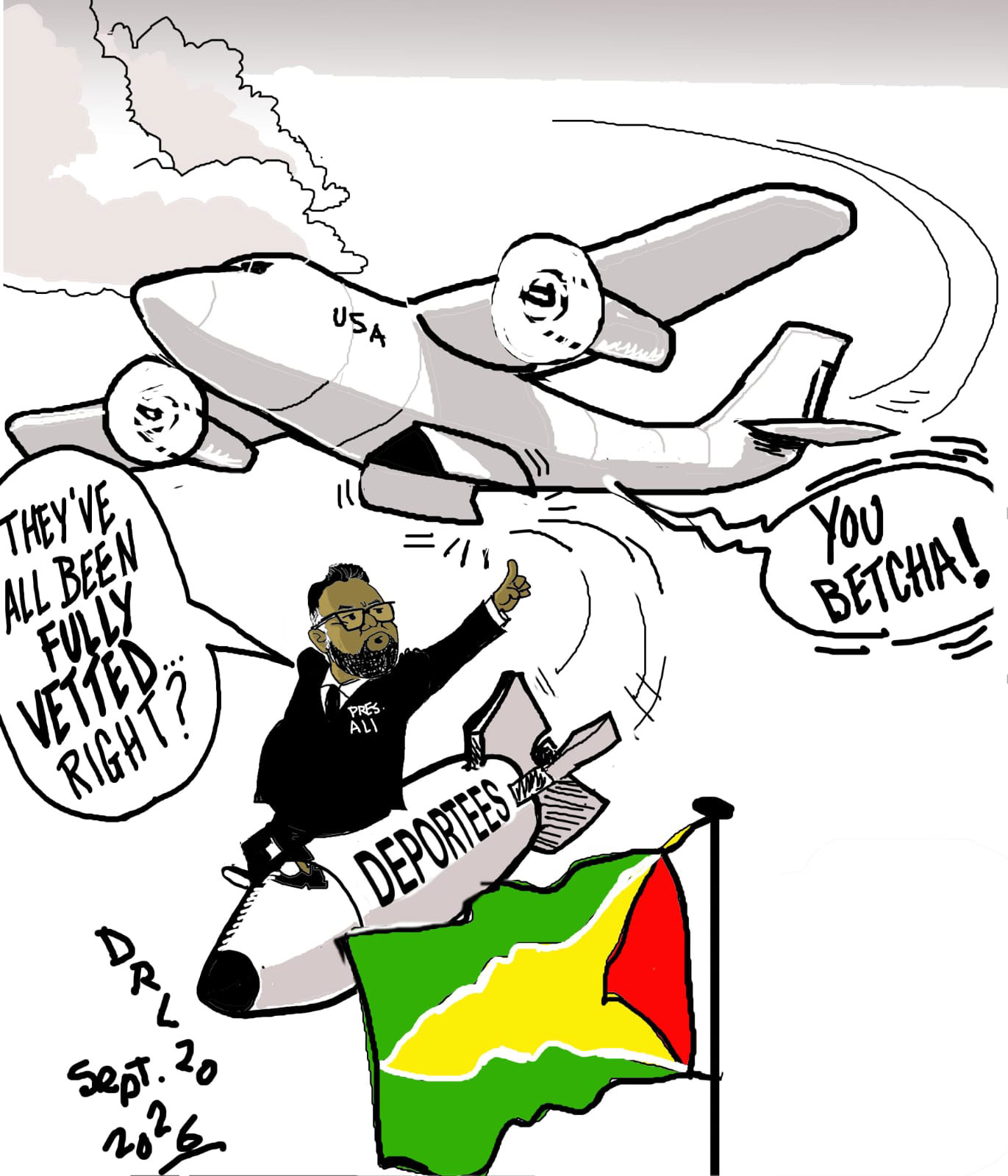
- Fear of return to home countries, diplomatic hurdles lead U.S. deportees to Guyana – sources
- Guyana’s 2026 oil earnings forecast jumps from US$2.8B to US$6.5B
- Sod turned for construction of new $1.3 billion New Amsterdam Market
- Iranians rally in biggest show of defiance against U.S. since war began
- APNU says 2020 election fraud trial exposing PPP/C’s own irregularities
U.S. Sanctions are Real
By José Cárdenas
That the United States government announced this week that it has begun imposing sanctions on Guyanese citizens engaging in anti-democratic behavior should not have come as a surprise to anyone.
Indeed, top U.S. officials signaled as early as last March that such behavior would have international consequences.
What is regrettable is the failure to heed those warnings, especially by a U.S.-based commentator who repeatedly but wrongly assured Guyanese audiences that the U.S. government had neither the authority nor the will to hold Guyanese officials accountable for their efforts to impede a final reckoning of the March 2 national election.
One wonders what comfort those erroneous assurances gave to those actors who are out to thwart the will of the Guyanese people.
Now that the U.S. has demonstrated the will and capacity to act to defend Guyanese democracy, those very same individuals would do well to understand that this week’s action is merely the tip of the iceberg as far as the authorities the U.S. government possesses to respond when democracy is threatened.
It is important to understand that the sanctions announced this week — the revocation of U.S. visas; that is, the ability to travel to the U.S. — were actions taken by the State Department under its own authorities.
Under Section 212(f) of the Immigration and Nationality Act of 1952, the Department can bar any foreign citizen (and their immediate family members) at any time for any reason from entering the U.S. They do not have to explain the reasons to anyone.
Because of privacy laws, however, the U.S. cannot disclose the names of individuals sanctioned, but the newly sanctioned will certainly know if they try to travel to the U.S. for business or pleasure. They will be unceremoniously turned away.
Other U.S. legislation gives other Departments and agencies of the U.S. government broader sanction authorities.
For example, the Global Magnitsky Human Rights Accountability Act gives the U.S. Treasury Department broad powers to impose financial sanctions on persons determined, among other things, to be responsible for or complicit in, or to have directly or indirectly engaged in, certain human rights abuses or corrupt acts anywhere in the world.
Those are open to wide interpretation — on purpose.
For example, in 2018, the U.S. sanctioned (“designated”) the President of Nicaragua’s Supreme Electoral Council, Roberto Rivas Reyes, and his wife, for involvement in significant corruption and for perpetuating electoral fraud that undermined Nicaragua’s electoral institutions.
Such a “designation” by the U.S. Treasury means any and all economic assets the individual possesses in the U.S. are frozen — i.e., made inaccessible to the owner — and that individual is prohibited from any transaction that involves any contact with the U.S. banking system.
Essentially, it means the individual becomes an economic “non-person”, since even domestic banks and other institutions will shun the individual for fear of running afoul of U.S. sanctions, because of their connectivity to the U.S.
And these are just individual sanctions.
As has been demonstrated next door in Venezuela, the U.S. has wide-ranging authorities to respond to anti-democratic behavior by targeting whole sectors of any economy — for example, Venezuela’s oil sector.
One hopes Guyana never reaches that stage.
Now, given the electoral calendar in the U.S., some might want to believe that time is running out for the Trump administration, and that should Joe Biden win the election, sanctions will fade away with the passage of administrations.
But that would be foolhardy.
It is obvious to anyone paying attention is that there is no partisan divide in Washington on the need for a transparent, democratic resolution in Guyana. The many statements from the U.S. Congress backing CARICOM, the Organization of American States, and other international stakeholders have been clear.
In the U.S. Senate, we have seen the highest-ranking Democrat and Republican on the Senate Foreign Relations Committee, as well as the leading Democrat and Republican on the Western Hemisphere subcommittee, weigh in.
In the House of Representatives, the Democratic Chairman and Vice Chairman of the House Foreign Affairs subcommittee on the Western Hemisphere, as well as several members of the Congressional Black Caucus, all Democrats, have joined their Republican colleagues in supporting the calls for a declaration of results that favors the winner of the largest number of votes.
At a time of heightened partisanship in domestic U.S. politics, readers should note that there is no division regarding Guyana’s current impasse. To believe a change in presidential administrations will somehow entail a reversal of U.S. concern for democracy in Guyana is destructive wishful thinking.
There is still time to conclude Guyana’s recent electoral cycle without more collateral damage to the country. International friends of Guyanese democracy want to see the impasse resolved expeditiously and peacefully. However, those who have differing agendas must realize there are ever-more-serious consequences for their actions.
*José Cárdenas is a former U.S. official who had senior positions in both the U.S. Congress and Executive Branch, focusing on Latin America and the Caribbean. He is a government relations consultant in Washington.
(The views expressed in this article are those of the author and do not necessarily reflect the opinions of this newspaper.)
Share this:

Discover more from Kaieteur News
Subscribe to get the latest posts sent to your email.
Similar Articles
Website Hits

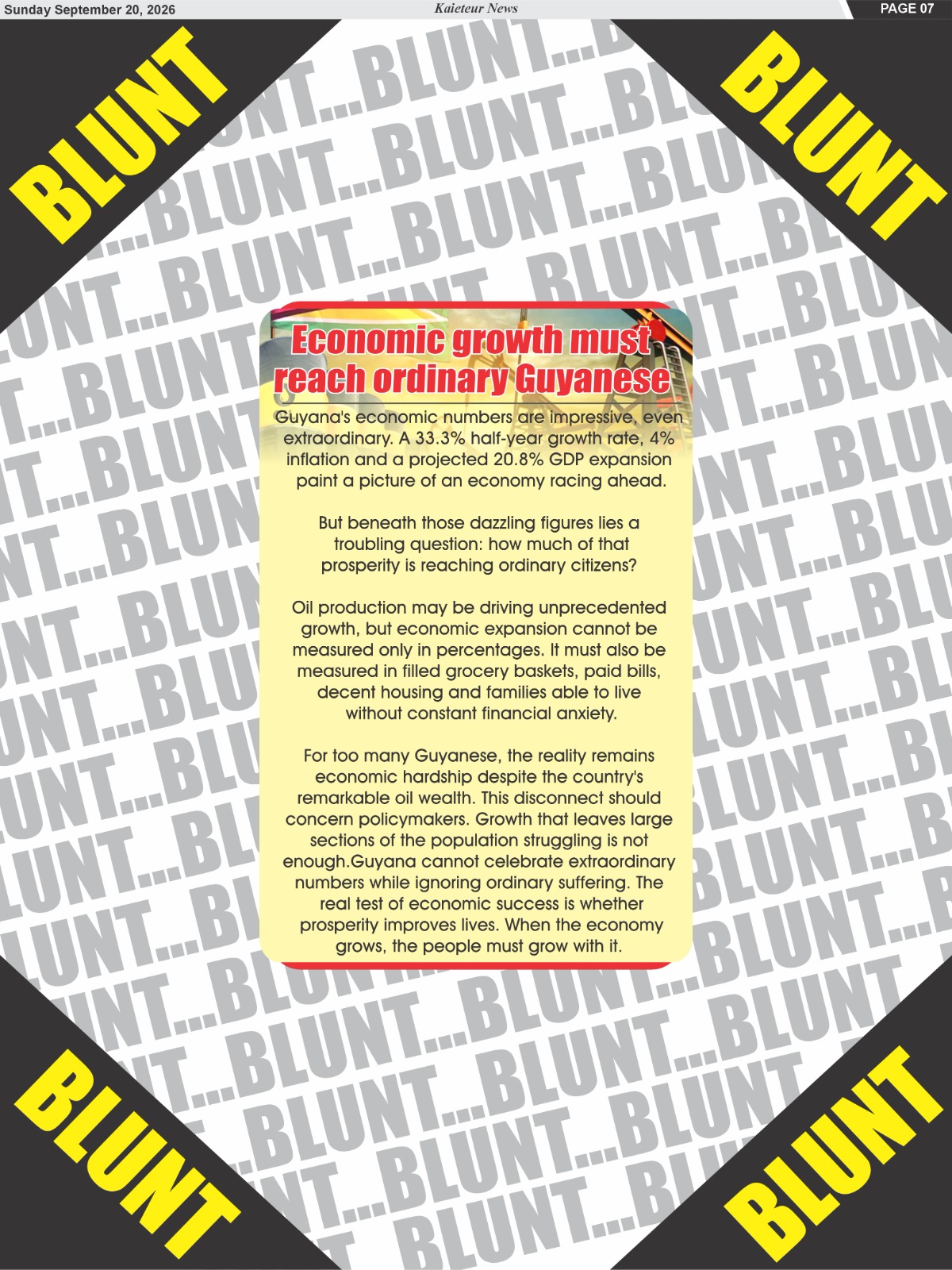
Blunt of the day
Sports

Features/Columnists

Sir. Ronald Sanders

The GHK Lall Column

Weekend Cartoon