Latest update October 22nd, 2026 6:44 PM



Latest News
Lessons from Hurricane Irma
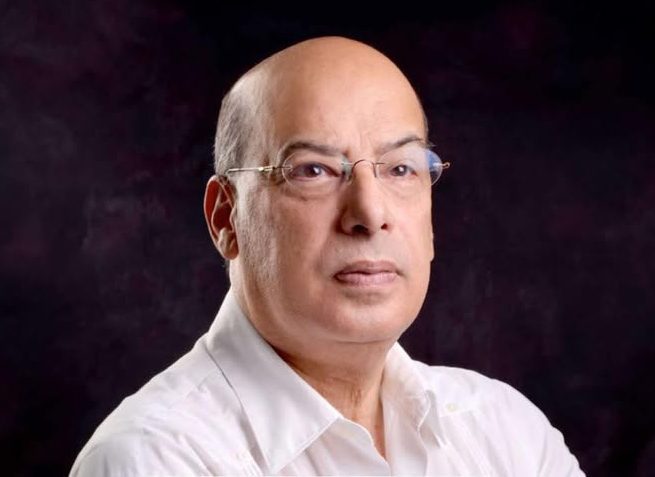
By Sir Ronald Sanders
(The writer is Antigua and Barbuda’s Ambassador to the United States and the OAS and High Commissioner to Canada. He is also a Senior Fellow at the Institute of Commonwealth Studies, University of London and Massey College in the University of Toronto. The views expressed are his own)
Since September 6 when Hurricane Irma, the most monstrous storm that the Atlantic has endured

Sir Ronald Sanders
in history, thundered-up to the tiny island of Barbuda and devastated it, I have been telling audiences in Washington DC, and, through the media, to the wider world that Climate Change and global warming are a reality and here to stay.
The 1,700 persons who inhabited Barbuda until September 9, including 500 children of school-age, would need no convincing that the weather is far from normal, and that, increasingly over the last 25 years, hurricanes have become larger, stronger and more brutal in the damage that they inflict. The Barbudans have been amongst Hurricane Irma’s most affected victims.
On September 12, in a formal statement to representatives of the member-nations of the Organisation of American States (OAS), I said on behalf of Antigua and Barbuda: “These storms know no borders. They cross them at will and with no fear of being turned away by any immigration officer. They know no ideology or embargoes. So, Irma stalked through parts of Cuba before it went on to parts of the United States. They make no discrimination between small or large, or poor or rich. They see no white people, or black people or any shade of colour in between. Their destruction is ruthless, heartless and pitiless”.
“That is why”, I said, “no nation can stand apart from the reality of climate change or the effects of global warming”. I repeated that statement to Emergency Aid Agencies, representatives of developed countries, a Public forum organised by the Center for Strategic and International Studies, and in many media interviews.
With regard to Barbuda, its land mass is 62 square miles. Hurricane Irma was 364 miles wide when it spread itself across the Island, overwhelming it in size, strength and ferocity. Irma’s force was Category 5 plus, with winds gusting up to 220 miles per hour; much stronger than the force with which it tossed property aside when it stormed into Florida as Category 4, waning to Category 2. Neither Barbuda nor its inhabitants stood a ghost of a chance against so formidable and all-encompassing a monstrous power.
When Hurricane Irma departed, Barbuda was reduced to what Prime Minister Gaston Browne called ‘a mangled wreck’. It was uninhabitable, having no electricity, no potable water, and buildings that were structurally weakened and dangerous to enter. In those circumstances, it would have been irresponsible for any government to leave anyone on Barbuda. Thus, the government took the decision to evacuate everyone to Antigua. The decision was made more urgent because on the very day of the exodus, Hurricane Jose was forecast to set upon Antigua, following in Irma’s destructive path.
On Monday, September 11, even as Hurricane Irma was performing its ‘dance macabre’ over the other countries in the Caribbean, having delivered cruel blows to the US and British Virgin Islands, and all of the French/Dutch Island, St Martin/St Maarten, Pope Francis restated his conviction that Climate Change is real and perilous. He rightfully expressed the view that the impact of climate change will be hardest on the world’s poorest, and he was openly critical of those who do not play their part in reducing its effects. “If we don’t go back we will go down,” he warned.
Three things contributed to the fact that Antigua was scarcely damaged while Barbuda was decimated. First, Antigua and Barbuda are separated by 30 miles. Thus, only Irma’s outer bands hit Antigua. Second, Antigua is a hilly island; Barbuda is flat. Antigua has some natural resilience; Barbuda has none. Third, Antigua has experienced many hurricanes since the early 1990’s, the consequence of which has been higher codes for buildings and more awareness among the population of the need to take precautions. The Antigua and Barbuda government and, particularly the Prime Minister, gave strong leadership in gearing-up both islands for Irma.
There are lessons for the entire Caribbean to learn from the Antigua and Barbuda experience. The first is the importance of preparation and readiness such as I just described. The second is the incalculable benefit of strong and visionary leadership.
The people of Antigua and Barbuda have been high in their praise of Gaston Browne who took command of preparation for the impending storm and for managing the situation of Barbuda and its inhabitants. His leadership, they say, was “inspirational”. One of the things he did in preparation for the storm was to stock a warehouse in Miami with material that was flown in immediately for emergency relief in the wake of the storm. Hence, unlike the British, US and French Islands, Antigua was prepared to deal with the evacuees from Barbuda who increased Antigua’s population by 3 per cent overnight with all the demand for government services that such an increase entails. Beyond that, despite the treacherous conditions which lingered over Barbuda on the afternoon of the Hurricane’s passage, Browne was the first person to arrive on the island via a dangerous helicopter ride. His presence on Barbuda and the fact that he could personally give comfort and hope to the traumatised, bewildered and desperate people was decisive and invaluable.
The third is readiness for dealing with a post-hurricane humanitarian crisis. While Antigua could not have expected an overnight influx of the entire Barbuda population, in less than two days the government mobilised every resource to accommodate and care for them. Shelters were organised, Antiguans were asked to volunteer accepting children and elderly people into their homes, and essential material – food, water and basics for living were provided by the government. The Antiguans were remarkably open-hearted and welcoming. Of course, others helped – initially the Red Cross and then the emergency services of a few countries and hemispheric agencies. But, the initial costs were borne by the government. So, while the people of other islands, mostly colonies and outposts of powerful nations, were left in dire conditions for days – some are still waiting for help, this did not occur in Antigua and Barbuda.
In future, all Caribbean countries have to cater for a humanitarian crisis. Not many can decant from one part of their state to the other. Therefore, preparations will have to include stockpiling food, water, medicines and other essentials long before storms arrive on their shores.
The fourth lesson is that building codes and standards have to be dramatically improved. Storms in the future will be Category 5’s and more. Buildings have to be constructed to stand-up to them, or year after year the countries of the Caribbean and the United States will face huge costs to rebuild after disasters and to cope with humanitarian crises.
As it is, the government of Antigua and Barbuda is facing a bill upwards of US$250 million to rebuild Barbuda, but it is a US$1 billion economy. The government cannot do it alone. Barbuda is both a natural disaster and a humanitarian crisis that cries out for a global humanitarian response.
Responses and previous commentaries: www.sirronaldsanders.com
Share this:

Discover more from Kaieteur News
Subscribe to get the latest posts sent to your email.
Similar Articles
Website Hits

Blunt of the day

Sports
Features/Columnists

Sir. Ronald Sanders
The GHK Lall Column

Weekend Cartoon