Latest update September 21st, 2026 2:51 PM


Latest News
- Three killed in Baramita clash
- Defense accuses Police of misrepresenting court testimony, Magistrate says court unfazed by media
- Mohamed alleges political hand behind review of Justice Persaud’s U.S. visa
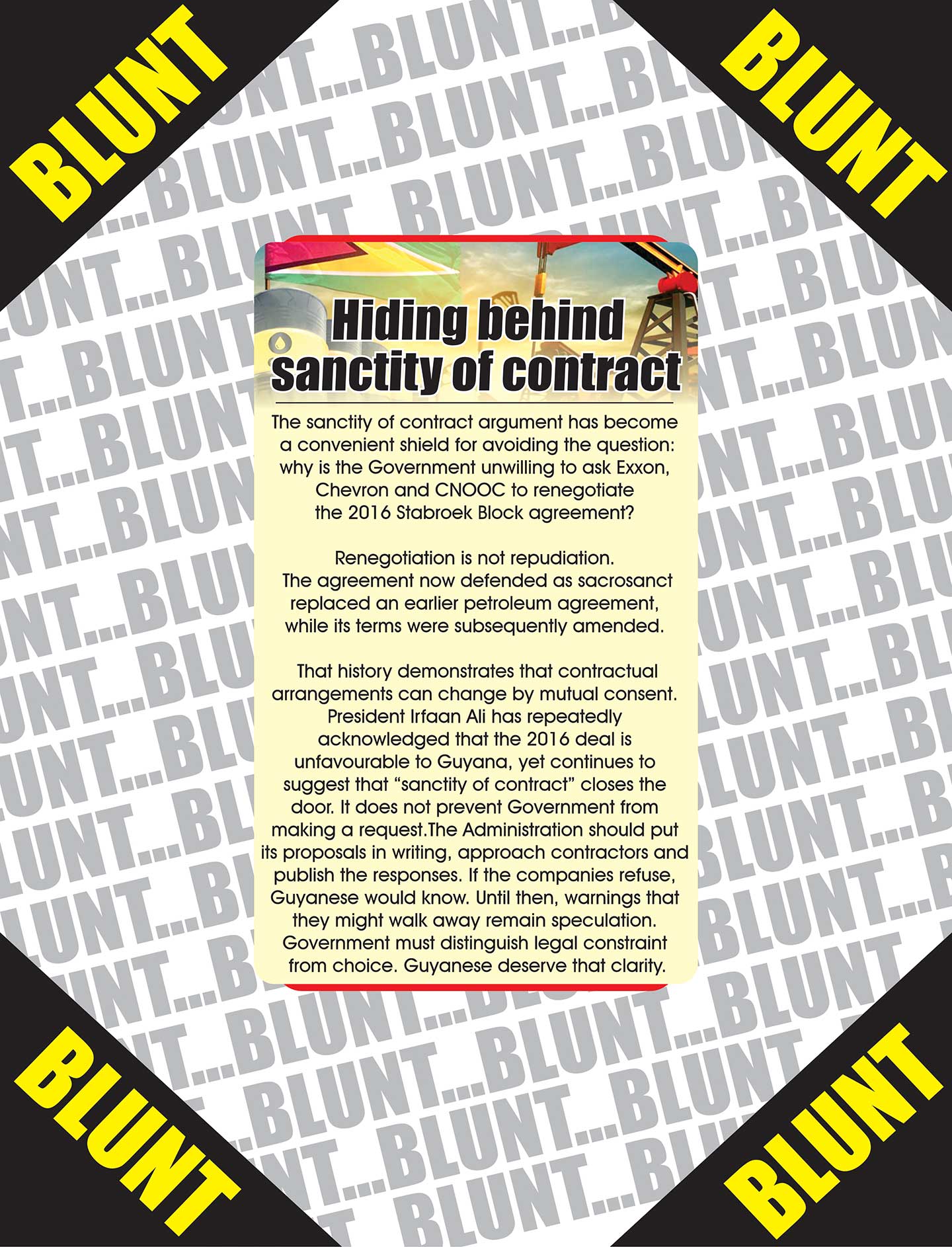
- ‘Stop blaming ‘sanctity of contract’ for keeping 2016 oil deal – Chris Ram tells Pres. Ali
- Iran and U.S. trade threats after Houthi attacks escalate regional conflict
A story associated with Jonestown
Dear Editor,
For me, Saturday 18th, November 1978, started out as a normal Flight Duty Day. According to my log book, my Guyana Airways flight programme for that day on the Twin Otter with Co-Pilot Anthony Brazao was as follows :-
(1)Timehri /Bartica /Timehri 08:00. (2) Timehri /Mabaruma / Timehri 09:30
(3) Timehri / Imbaimadai / Kamarang /Timehri 13:00. (4) Timehri / Bartica / Timehri 16:30.
Without any unusual delays, I should have been back home by 18:30. However, when I returned to Timehri from Bartica that afternoon, the Chief Pilot approached me and said that there was an emergency at Port Kaituma, but the runway was partially blocked by a disabled aircraft. He was therefore assigning my crew to do an emergency flight to Matthew’s Ridge to transport GDF soldiers. I consulted with my co-pilot and we agreed to do the flight. I called my family and told them of the situation, then retired to the crew-room to await developments.
I subsequently learned that the other Twin Otter flown by Capt. Spence and Astill Paul, had earlier in the day landed at Port Kaituma. The mission was to bring out US Congressman Leo Ryan and his party who had visited Jonestown. However, during boarding, the aircraft was riddled with bullets at the airstrip and the Congressman and some members of the party were killed.
It was a long wait at Timehri that night. The troops did not arrive until 1:00 a.m. The Twin Otter carries 20 persons. The party led by Major Ranny Johnson consisted of 22 soldiers with battle gear! Worse yet, at that hour of the morning, I could not get an updated weather report from Matthew’s Ridge. According to my log, we launched into the dark Northwest skies at 2:00 am on the 19th. Nov, and climbed to 8000ft. In those days, GPS and Flight Tracking systems were unheard of. Beyond 80 miles from Timehri, the only Navigational Aid was an unreliable Non- Directional Beacon (NDB). Knowledge of the country was what counted.
During our descent into Matthew’s Ridge, the weather deteriorated, and most of the descent was conducted in broken cumulus and stratocumulus clouds with light continuous rain. I decided to position the aircraft for the bad weather approach into Matthew’s Ridge. In that case I navigated the aircraft to what I called “the outer marker” which is a ground position 10 miles from the Ridge where the River, the Road and the Railway track intersect. From that point, I would fly a predetermined heading, at a predetermined speed, for a predetermined time, descending to a predetermined altitude. This manoeuvre would place the aircraft on a shallow base leg for Runway 27 well clear of the high ground to the right.
However, during the approach we encountered a thick fog bank and had to abandon the approach with a climbing left turn, since we were losing visual contact with the ground. A second attempt yielded the same result. I decided to climb to 3000ft and think through the situation. I determined that the fog was coming in waves, so I decided to hold for 10 minutes, before conducting another approach. I calculated that after holding, we had fuel for one more approach before we began to eat into our reserves which demanded that there must be at least one hour’s fuel in the tanks when we complete the approach at Timehri on the return leg.
During the approach, I told Tony to keep a sharp lookout for the flares on the runway, and shortly afterwards he announced that he can see something. I looked out and saw the flares at the threshold dimly flickering through the light rain and fog. Having identified the runway environment I continued the approach. As I neared the threshold, I noticed that there were only three flares on either side of the runway, so I anticipated that the roll out after touchdown would be in the dark. I employed the short field landing procedure and that wonderful aircraft, the De. Havilland Twin Otter responded nicely.
When the aircraft came to a stop, Major Johnson and the troops disembarked and disappeared into the darkness and drizzle to locate the trail for their walk to Port Kaituma. According to my log book we departed Matthew’s Ridge at 3:38 a.m. and landed at Timehri at 4:40 a.m. I finally got home at 6:30 a.m. Sunday 19th November.
Lloyd H Marshall
Former Senior Captain
Guyana Airways Corporation (defunct)
Share this:

Discover more from Kaieteur News
Subscribe to get the latest posts sent to your email.
Similar Articles
Website Hits

Blunt of the day
Sports
Features/Columnists

Sir. Ronald Sanders

The GHK Lall Column

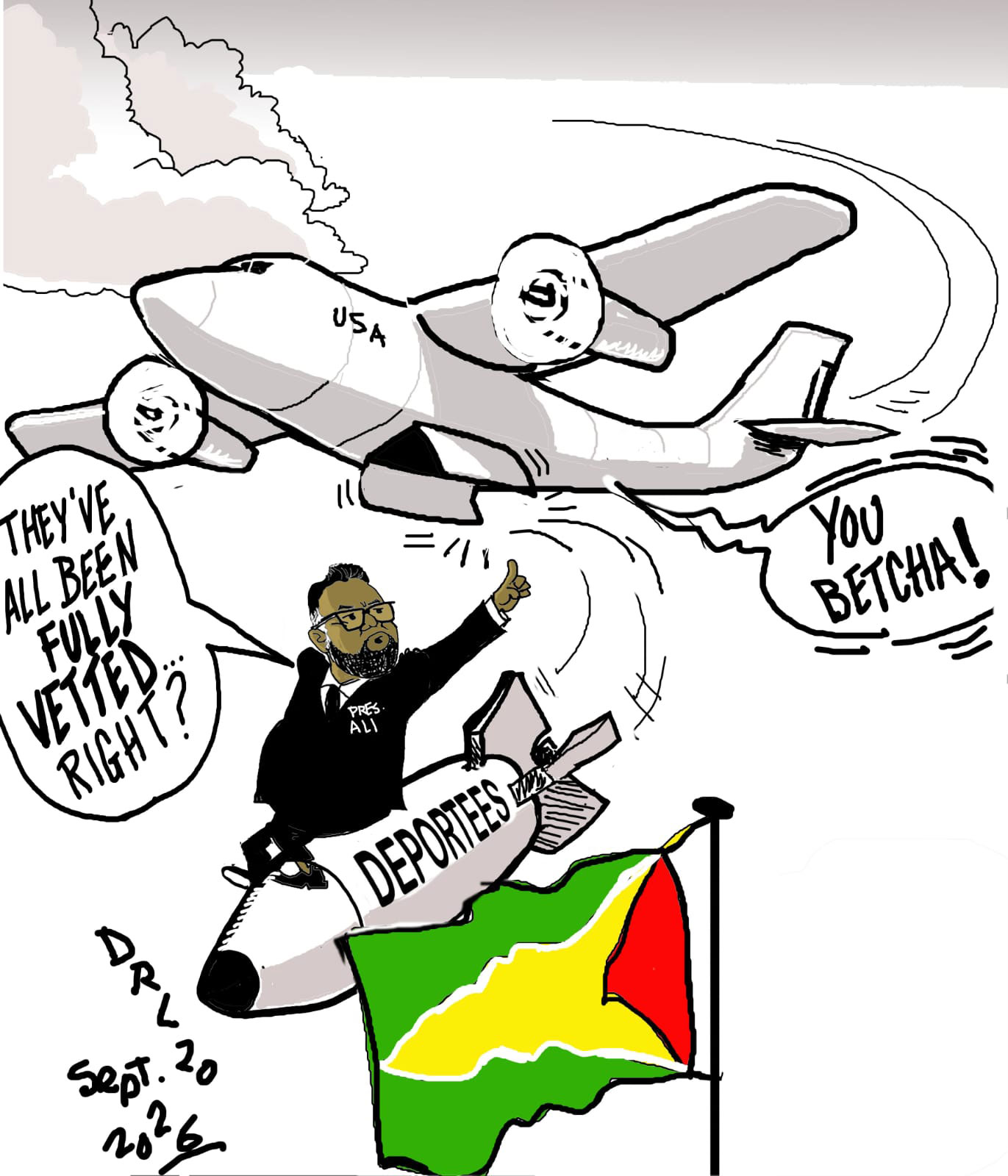
Weekend Cartoon