Latest update March 15th, 2026 12:35 AM

Mar 15, 2026 Features / Columnists, Peeping Tom
(Kaieteur News) – If neurosis were a natural resource, Guyana would have struck oil decades before Exxon arrived. And nowhere is our national anxiety more visible than in the current debate about the government’s cash grant—specifically, whether Guyanese who live overseas should also receive it.
Now I don’t pretend to be an economist. My experience with numbers is limited to calculating whether the bills I receive at the end of the month, exceeds my income. But even I can see that when a country announces it is giving out money, it produces two immediate reactions: gratitude from those who qualify and a sudden genealogical awakening among those who do not.
Overnight, people who have not set foot in Guyana since bell-bottoms were fashionable are rediscovering their deep spiritual connection to the land. Cousins who previously could not locate Guyana on a map are now explaining—with great patriotic fervour—why they are entitled to the same cash grant as the woman who has been standing in line at GPL for thirty years.
This phenomenon is not entirely new. In fact, we have seen it before. Back in the 1970s, when the government introduced remigration concessions, there was a lively argument about fairness. Many locals who had stayed and endured the difficult years wondered why incentives were being offered to those who had already left for greener pastures. It was a bit like rewarding someone for abandoning the ship while the rest of the crew stayed behind to bail water with teacups.
Of course, one understands the reasoning. Remittances from overseas Guyanese have kept countless families afloat over the decades. Without them, many households would have been surviving on pure optimism and a little rice. The diaspora has played a tremendous role in helping relatives through hard times, and that contribution deserves respect.
But here is where the arithmetic becomes psychologically disturbing.
If the cash grant is meant to benefit the people living in Guyana, then expanding the pool of beneficiaries begins to resemble one of those nightmares where you invite twelve guests to dinner and suddenly seventy-two people arrive—each holding a plate and smiling warmly.
It is widely believed that roughly half of all Guyanese live overseas. Fifty percent. Imagine that. For every person in Guyana there is another one abroad explaining to their friends that Guyana has “great potential.”
Now suppose every one of those overseas Guyanese decides they should also receive the cash grant. Suddenly the beneficiary pool doubles. And unless the national treasury has discovered a secret oilfield beneath the Bank of Guyana’s parking lot, that means the amount available for each person inevitably shrinks.
In other words, the pie does not get bigger; it simply gets sliced into thinner and thinner pieces until eventually everyone receives something roughly the size of a biscuit.
And this is where things begin to take on a slightly comic tone.
In recent months there has been a remarkable surge of interest among overseas-based Guyanese in obtaining identification cards, passports, and proof of citizenship. Some individuals who previously required Google to spell “Georgetown” are now urgently trying to verify the maiden name of their grandmother.
It is a touching rediscovery of national identity.
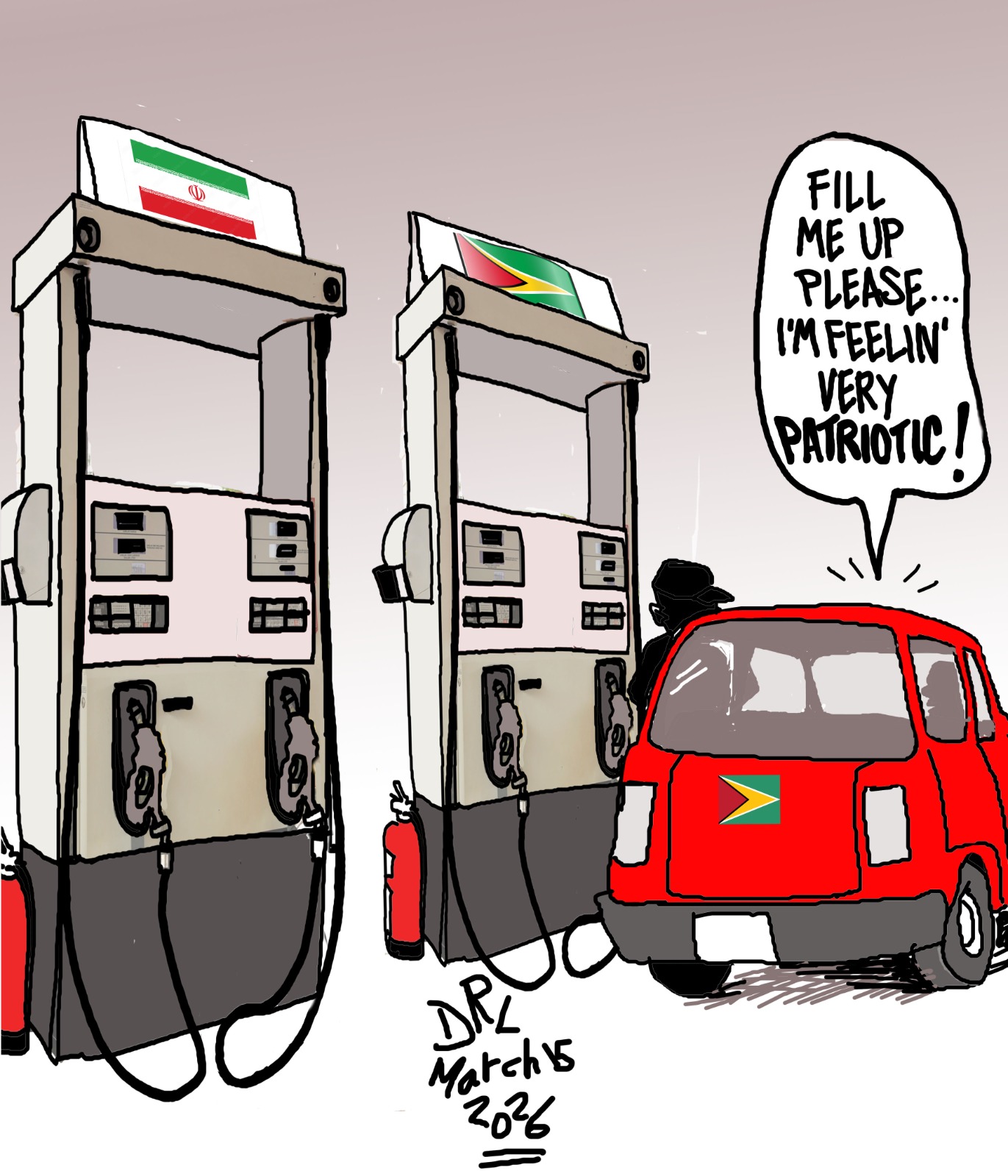
People who once described themselves as “Caribbean-adjacent North Americans” are suddenly declaring with misty-eyed patriotism that Guyana is their true home—particularly if that home comes with a cash grant and a house lot. One cannot help feeling that somewhere between patriotism has become slightly entangled with opportunism.
Now, before anyone accuses me of being anti-diaspora, let me say that overseas Guyanese are a vital part of the national story. They send money, invest in businesses, and occasionally return home with suitcases full of electronics that make their relatives believe they work for NASA.
But there is still a philosophical question to be asked: when the government distributes public money intended to help citizens cope with the rising cost of living, who should be first in line?
The family member struggling with grocery bills? Or the cousin who lives comfortably in Toronto but has suddenly developed a passionate attachment to the Essequibo River?
At some point, a society must decide whether its limited resources are meant primarily for those who live within its borders.
Which brings us to a very old principle—one that predates oil wealth, cash grants, and even the modern Guyanese passport. Charity, as the saying goes, begins at home.
And if that phrase means anything at all, it surely suggests that the people who stayed—who endured the hard years, the shortages, the blackouts, and the endless lines—might reasonably expect to benefit first when the national purse is opened.
Otherwise, we may soon find ourselves in the peculiar situation where half the country is abroad, the other half is at home, and everyone is applying for the same cheque.
At which point the government will face a terrible dilemma: either increase the grant or invest heavily in therapy for a very anxious nation.
(The views expressed in this article are those of the author and do not necessarily reflect the opinions of this newspaper.)
Subscribe to get the latest posts sent to your email.
Your children are starving, and you giving away their food to an already fat pussycat.
Mar 15, 2026
…cites omission of Young Warriors as reason Kaieteur Sports – In a strongly worded correspondence to the Berbice Cricket Board (BCB), the Albion Cricket Club (ACC) is claiming that they will...Mar 15, 2026
(Kaieteur News) – If neurosis were a natural resource, Guyana would have struck oil decades before Exxon arrived. And nowhere is our national anxiety more visible than in the current debate about the government’s cash grant—specifically, whether Guyanese who live overseas should also receive...Mar 15, 2026
By Sir Ronald Sanders (Kaieteur News) – Amid the current turmoil in the world, it is important that, in the Americas, we should not forget the urgent humanitarian and political crisis confronting the Haitian people. For many years, the United States has been the principal destination for...Mar 15, 2026
Hard Truths by GHK Lall (Kaieteur News) – From the law of unintended consequences, I highlight situations that deliver unintended exposures. BBC World Questions: Guyana revealed internationally what Guyana really is, where Guyanese are. The former is a snake pit, the latter a crab dance...Freedom of speech is our core value at Kaieteur News. If the letter/e-mail you sent was not published, and you believe that its contents were not libellous, let us know, please contact us by phone or email.
Feel free to send us your comments and/or criticisms.
Contact: 624-6456; 225-8452; 225-8458; 225-8463; 225-8465; 225-8473 or 225-8491.
Or by Email: glennlall2000@gmail.com / kaieteurnews@yahoo.com