Latest update February 3rd, 2026 12:40 AM

Feb 03, 2026 Letters
Dear Editor,
The critique leveled by Dr. Jerry Jailall (KN, Feb 1) and several other contributors in these pages regarding the working poor and the perceived shortcomings of the 2026 Budget touches on the classic economic dilemma of guns versus butter. In the context of a resource-rich nation like Guyana, this is not a military debate but rather a choice between immediate consumption and long term capital investment.
While the call for direct relief is understandable, an honest evaluation of Guyana’s trajectory shows a deliberate and necessary pivot away from the mistakes seen in the Venezuela model.
Venezuela’s collapse was not caused by a lack of wealth but by a catastrophic choice to prioritize consumption above all else. They used oil revenues to fund massive, unsustainable social subsidies and price controls while neglecting the infrastructure and industrial diversification needed to sustain an economy. When oil prices dipped, their social safety nets melted away, leaving the poor in a worse state than before the boom.
In contrast, Guyana is following a path of institutional discipline more akin to the Norway model, though at an accelerated emerging market pace. This contemporary struggle mirrors the famous standard of living debate regarding the British Industrial Revolution. Economic historians like T.S. Ashton and Eric Hobsbawm famously sparred over whether the English working class actually benefited during the rapid industrialization of the 1830s and 1840s. The pessimists argued that the working poor suffered immensely as the nation’s wealth was funneled into the machinery of industry.
Meanwhile, the optimists pointed out that while the pain was acute in the short term, this massive capital accumulation was the only reason the cost of living finally began to fall. The crucial question the Guyanese people are asking today is the same one asked in 19th-century England: how long must we wait?
In the English case, real wages remained largely flat during the early decades of the industrial revolution, with the most significant and sustained increase not occurring until after 1850. By that point, the massive investments in steam power and railways had finally matured, causing prices to tumble and real wages to rise by sixty percent in just forty years. Guyana is currently in its own version of that pivot, but with the advantage of modern technology and high-yield resources, we do not have to wait decades for the turnaround.
By allocating the lion’s share of the 1.5 trillion dollar budget to infrastructure, energy, and the health and education sectors, the government is building the productive capacity of the nation. These are the guns of our development.
The gas to shore project is perhaps the most significant pro poor measure in this regard. With its operational target appearing on the immediate horizon of the next eighteen to twenty-four months, the timeline for relief is not a generation away but a matter of the near future. By slashing electricity costs by 50 percent, the state is providing a permanent reduction in the cost of living that is far more effective than a one time cash grant. This energy revolution serves as a foundation for manufacturing and job creation that can outlast the oil era.
The roads and bridges being constructed are the literal arteries of wealth creation, connecting the working poor to new markets and employment. Furthermore, by removing taxes on essentials and raising tax thresholds, the government is increasing the social wage. This approach lowers the cost of living through structural improvement rather than inflating the money supply through handouts.
Critics who claim the government is doing nothing or not doing enough should consider that history shows that nations that spend their windfall on immediate consumption remain trapped in the resource curse. Guyana’s 2026 Budget is a rejection of that curse. It is a strategic bet that building a modern, diversified economy is the only way to provide a future where the working poor are no longer poor.
The current pain is real, but it represents the construction pain of a nation being rebuilt from its foundation. Much like the English transition, the benefits of industrialization are often lagged, but they are the only sustainable path to broad prosperity. Meanwhile, the government’s short term support such as cash grants and education supplements are deliberately inserted into this calculus of pain. To abandon the infrastructure of tomorrow for the populist spending of today would be to invite the very Venezuelan trajectory we must avoid.
Sincerely,
Dr. Walter H. Persaud
Subscribe to get the latest posts sent to your email.
Your children are starving, and you giving away their food to an already fat pussycat.
Feb 03, 2026
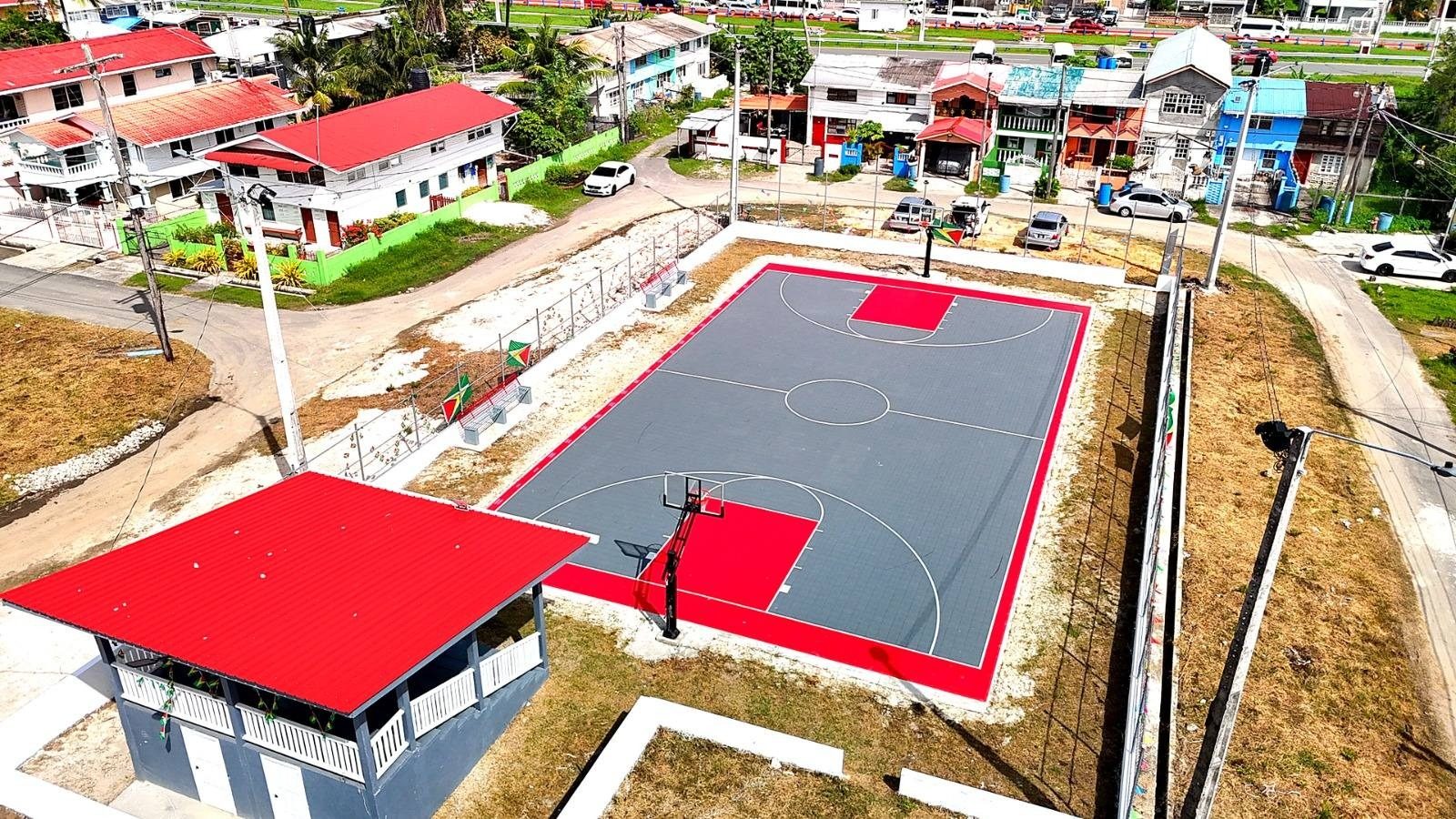
Kaieteur Sports – Basketball in Guyana received a major boost with the commissioning of a brand-new all-weather court in Campbellville, Georgetown, the first facility of its kind in the country...Feb 03, 2026
(Kaieteur News) – It is a rude question, almost an impertinent one, and that is why it unsettles. In Guyana, at this time of the year, it is drowned out by louder, more theatrical questions: Who is winning the Budget debate? Who is exposing whom? Who sounds convincing in the National Assembly?...Feb 01, 2026
By Sir Ronald Sanders (Kaieteur News) – When the door to migration narrows, the long-standing mismatch between education and economic absorption is no longer abstract; a country’s true immigration policy becomes domestic — how many jobs it can create, and how quickly it can match people to...Feb 03, 2026
(Kaieteur News) – Stranger things have happened, that’s for sure. I just can’t recall when. But there he is, the We Invest In Nationhood leader, Mr. Azruddin Mohamed, operating in a new environment, and carving out his own path, actually laying down some pointers for the future. Does...Freedom of speech is our core value at Kaieteur News. If the letter/e-mail you sent was not published, and you believe that its contents were not libellous, let us know, please contact us by phone or email.
Feel free to send us your comments and/or criticisms.
Contact: 624-6456; 225-8452; 225-8458; 225-8463; 225-8465; 225-8473 or 225-8491.
Or by Email: glennlall2000@gmail.com / kaieteurnews@yahoo.com