Latest update December 16th, 2025 12:31 AM

Dec 15, 2025 Letters
Dear Editor,
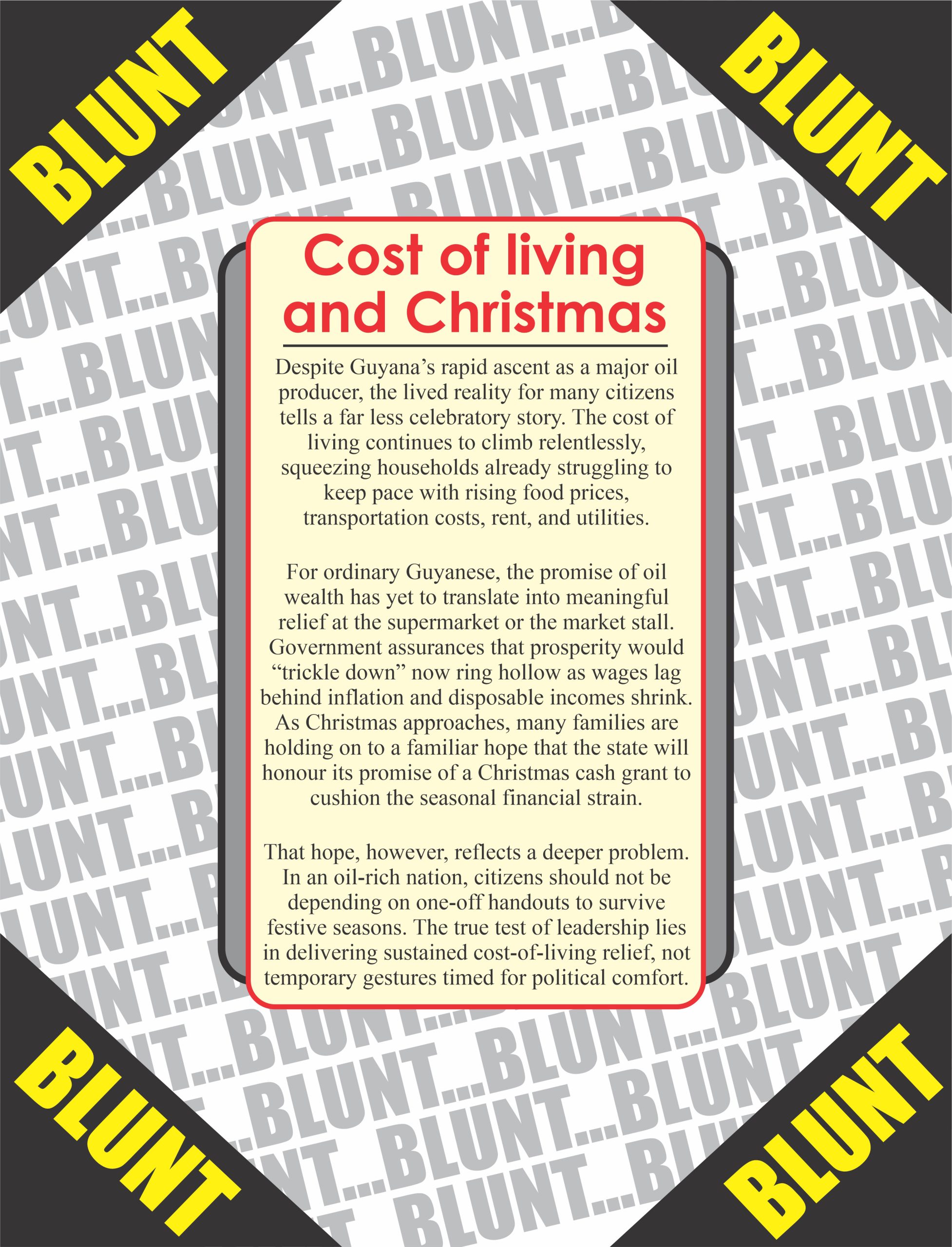
Over the past several weeks, the national conversation has again turned to the issue of cash grants and temporary relief measures. This discussion has taken on new urgency since the release of the Inter-American Development Bank’s 2024 report, which confirms a truth that Guyanese have been living daily: 58% of our citizens are living in poverty, and 32% are in extreme poverty. These figures are not abstract data points—they represent families who are struggling to survive, parents who skip meals so their children can eat, and communities whose hopes are dimming under the weight of a worsening cost-of-living crisis.
There is no shame in needing assistance. Thousands of Guyanese are doing everything in their power to stay afloat in an economy that continues to work against them. And let it be clear: any relief that reaches a struggling family should be accepted without hesitation. Temporary measures, such as cash grants, offer immediate breathing space to those who need it most, and I support any effort to ease that burden.
However, we must also be honest with ourselves: temporary measures are not a plan. A cash grant is, at best, a plaster placed over a deep and expanding wound. It may provide short-term comfort, but it cannot heal the underlying fractures in our social and economic systems. Once the money is spent, often within days, the realities remain unchanged, and in many cases, worsen. We see predictable price increases when these grants enter the economy, and those prices seldom fall again. The end result is that vulnerable households are left even more exposed than before.
Guyana requires, and deserves, far more than short-term interventions. What we need is a coordinated, strategic, and well-articulated national poverty reduction plan grounded in sustainability, dignity, and economic justice.
Such a plan must include:
Prosperity cannot be achieved through handouts or flashy ribbon-cutting ceremonies. Guyanese need meaningful employment that allows families to build wealth, not just survive from week to week.
Fuel prices, food prices, and transportation costs continue to erode households’ ability to survive. Any poverty strategy must confront price instability and promote fair market practices.
These sectors are the backbone of communities across our country. Yet access to credit remains uneven and often tied to political allegiance. Every deserving entrepreneur should have an equal chance to thrive—without fear, favour, or discrimination.
With Guyana now one of the world’s fastest-growing oil producers, our people must feel the benefit of that wealth. Strengthening our currency, building national savings, and ensuring equitable revenue distribution must form part of any meaningful strategy.
Women, children, the elderly, persons with disabilities, and impoverished families cannot be afterthoughts. Targeted, sustained programmes must be implemented to provide security, opportunity, and social mobility.
No poverty-reduction plan can succeed if our institutions remain weak, politicised, or inconsistent in delivering justice and fairness. Parliament must function as intended. Laws must be enforced without bias. Citizens must trust that the system works for them, not only for the few.
The Government of Guyana must recognise that, in a democracy, the people are the shareholders. Our resources—oil, gold, land, forests—belong first and foremost to Guyanese. Foreign investment is welcome, and international partnerships are important, but the North Star of every policy must be the well-being of our people.
Guyanese must demand a future where prosperity is not a slogan but a reality, where development strengthens households, not headlines; where institutions serve the people; where no child goes to bed hungry in a nation overflowing with potential.
As leaders, and as citizens, we owe it to ourselves and our children to insist on a long-term, structural, people-centred approach to poverty reduction. Cash grants may provide temporary relief, but they are not the solution. Only a coherent national strategy, rooted in fairness, sustainability, and economic justice—will move Guyana forward.
We cannot outsource this struggle. It belongs to us. And so does the future of our beloved Guyana.
Sincerely,
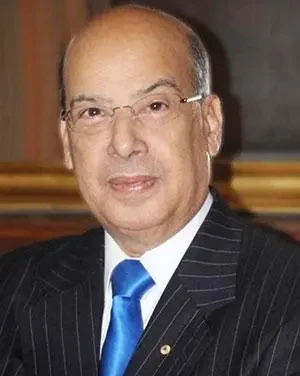
Hon. Amanza Walton, MP
Subscribe to get the latest posts sent to your email.
Your children are starving, and you giving away their food to an already fat pussycat.
Dec 16, 2025
Kaieteur Sports – Slingerz Racing Stable etched its name into Brazilian horse racing history on Sunday when Galo White stormed to victory in the prestigious Linneo de Paula Machado Grand Prix...Dec 16, 2025
(Kaieteur News) – The world of global politics is like a big, noisy room. The largest and richest countries are the loudest voices. It’s easy for a smaller country to get lost in the crowd. So, how does a smaller country make itself heard? One of the most effective ways is by having its...Dec 14, 2025
(Kaieteur News) – The Caribbean is living through a moment of rising geopolitical tension. As the United States intensifies pressure on the Maduro government in Venezuela, the ripples reach CARICOM shores fast. None of these countries chose this confrontation, yet each of them is forced to...Dec 16, 2025
(Kaieteur News) – Never, ever, would the thought have come. Not relative to Guyana’s President Mohamed Irfaan Ali. Probably a great number of other Guyanese, but not Dr. Ali. Would any Guyanese still in possession of their senses-the right ones-ever harbor the thought that Pres. Ali has...Freedom of speech is our core value at Kaieteur News. If the letter/e-mail you sent was not published, and you believe that its contents were not libellous, let us know, please contact us by phone or email.
Feel free to send us your comments and/or criticisms.
Contact: 624-6456; 225-8452; 225-8458; 225-8463; 225-8465; 225-8473 or 225-8491.
Or by Email: glennlall2000@gmail.com / kaieteurnews@yahoo.com