Latest update August 2nd, 2026 12:45 AM



Latest News
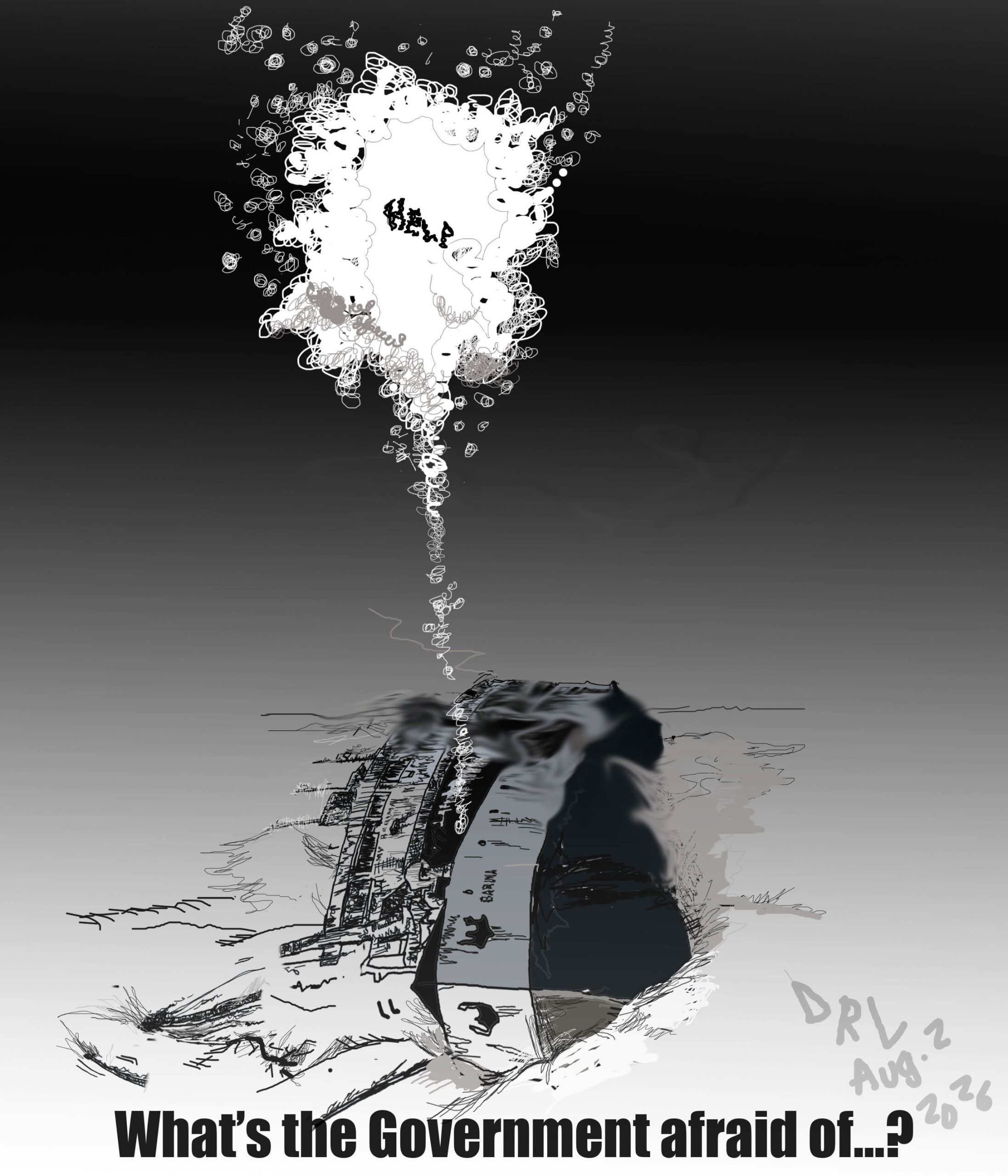
- Govt. backs down on Barima memorial plan
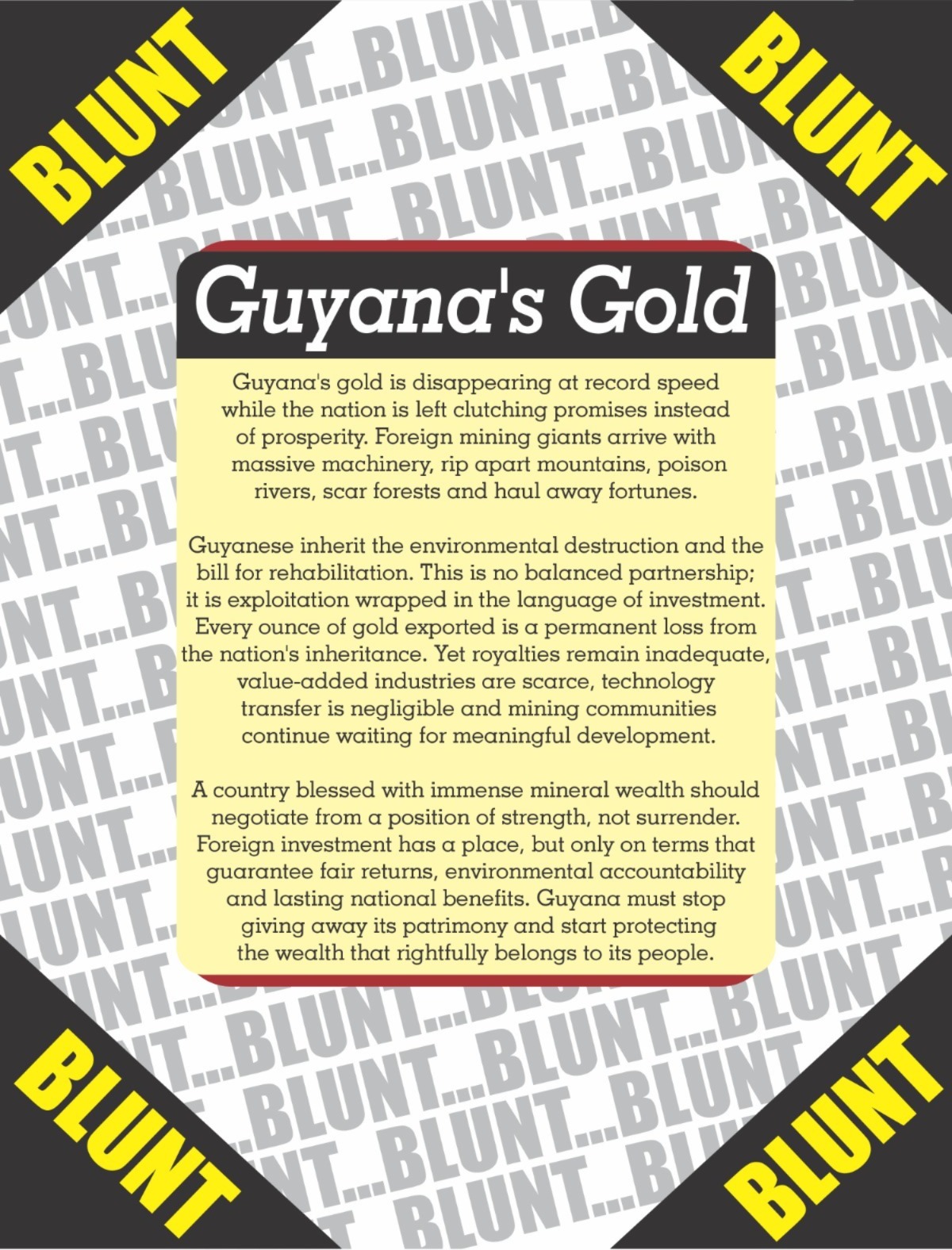
- ‘Billions flow overseas while Guyana gets nothing’ – Glenn Lall says in fresh broadside against gold deals
- “Bones, not concrete’: Families of Barima victims demand their dead
- Israeli strikes kill four across Gaza, destroy medical supply warehouse
- Oil’s curse is hanging over the World’s fastest-growing economy – Bloomberg report
From Where I Stand: Our democracy isn’t unevolved — it’s unfinished. And that may be our advantage.
By Janelle A.N Persaud
(Kaieteur News) – A few weeks ago, I wrote a column calling Guyana a democracy unevolved. And at the time, I meant it as criticism. I was looking at Guyana through the lens of Western democratic expectations; elections, institutions, accountability, civic participation and I concluded that we were falling short. We weren’t meeting the standard or matching the blueprint.
But recently, as I’ve been sitting with this idea more deeply, something shifted. The more I explored where those expectations came from, the more I began questioning the assumptions beneath my critique.

By Janelle Persaud
Because the truth is, much of what we now recognise as formal democracy was inherited.
The system, the language, the rules, the posture; these did not emerge from our political culture or historical development. In many parts of the Global South, including here in Guyana, the word “democracy” doesn’t even exist in our Indigenous languages. So, we didn’t build this version of democracy from memory or shared tradition. We received it already assembled, along with the expectation that we should know how to make it work.
Significant to note, is that the absence of the Western word “democracy” in our languages does not mean there were no democratic values or practices in our history. Many Indigenous and pre-colonial societies across the world had forms of shared leadership, accountability to community, consensus decision-making, and governance rooted in collective identity rather than individual power. This me to conclude that what we now call “democracy” may be only one expression of a much older human instinct toward shared responsibility and communal decision-making.
And here’s the irony I’ve had to confront: when I called Guyana a “democracy unevolved,” I was critiquing us using the same inherited standards I now believe deserve re-examination. I was holding us accountable to a model I never stopped to question or did, but could not appreciate then that such is the paradox of post-colonial democracies. We judge ourselves with tools we didn’t design and until we acknowledge that tension, we’ll continue confusing imitation with progress, and critique with agency.
Scholars like Mahmood Mamdaniand Amartya Sen have written about how many post-colonial societies inherited Western political models that weren’t built with their histories, cultures, or realities in mind. And for a long time, I absorbed those frameworks without fully questioning their origins and then I held Guyana accountable to them.
Now, I’m not excusing governance failures, democratic violations, corruption, or civic intimidation. I’m not suggesting we lower the bar, or pretend everything is fine. Rights, accountability, transparency, and participation still matter deeply. And I’m certainly not condoning what so often passes here as “democracy.”
What I’m saying is something a little more uncomfortable: perhaps we have never had the chance to ask whether the version of democracy we inherited actually fits who we are. I wish to invite us to self-examine and consider whether there is something to learn and adapt even, as we shape our own brand of democracy.
Because when democracy has to live inside complexity such as plural identities, contested belonging, and unresolved memory, it won’t be neat or expedient and it certainly isn’t linear.
And perhaps part of what makes this moment so striking is that the nations that once defined, exported, and defended democracy now appear unsure of it themselves. The traditional torchbearers of democracy like the United States, the United Kingdom and other parts of Europe are experiencing their own crises of trust, legitimacy, and national identity. The systems that were once held up as models now strain under polarisation, misinformation, institutional fatigue, and cultural fragmentation. So the other question is: if even the places that shaped democracy are struggling to sustain it, then who or where has the authority to imagine its next form?
The world is changing and the future might not belong to nations that perfected democracy in the past, but to those still wrestling with how to make it meaningful, representative, and rooted in plural lived realities. This is why our collective voice and input matter as Guyanese from academia and private sector and labour to yes, the average citizen and of course, the government.
When I shared this with a friend, he didn’t think Guyana had done even the bare minimum of practising democracy and questions what role we could possibly play in reshaping it. I understand the sentiment but I disagree. I’m beginning to think that the issue is yes, willingness but significantly; permission. From the moment democracy supposedly returned to us in 1992, it was under international supervision and external validation. The expectation might’ve been less about adaptation and more about compliance. We were never invited to imagine democracy, only to perform it. Perhaps, we didn’t think we had the authority to question its design or reinterpret it through our own plural realities. If this is true, then the work ahead isn’t merely political—it is imaginative.
So for us, the better question might be: what could we create if we treated democracy not as inheritance, but as something we are allowed to shape for ourselves?
Maybe our unfinishedness isn’t evidence of failure as once posited. It could be a sign of possibility and we’re just early in the part of the democratic journey the rest of the world is only now beginning to face.
As the West trembles under the weight of democratic crises of their own, we can begin asking what global democracy might learn from places like ours.
From where I stand, those of us who learned democracy second might very well be better positioned to help shape its next form – but only if we give ourselves permission to imagine what is possible and act.
Share this:

Discover more from Kaieteur News
Subscribe to get the latest posts sent to your email.
Similar Articles

Blunt of the day
Sports
Features/Columnists

Sir. Ronald Sanders

The GHK Lall Column

Weekend Cartoon