Latest update March 28th, 2026 12:30 AM

Sep 25, 2025 Letters
Dear Editor,
The Constitution Reform Commission (CRC) has been criticised for underperformance. I am a member of the CRC, representing APNU, but I respond here on my own behalf as a citizen. In my view, while several criticisms have merit, others have been misdirected or are too narrow in focus. I therefore attempt here to redirect and widen the discussion on this critical national matter.
Firstly, I think we must distinguish between the Constitution Reform Commission and the content and process of constitution reform itself. On constitution reform itself, the nation has somehow adopted the practice that this reform must be conducted through a time-bound project to systematically review the entire constitution from cover to cover. We must undertake this reform, it seems, even if there exist no or a few substantial legal, social, economic, and political conditions compelling such a complete overhaul. But, as the GHRA correctly points out in its recent media release, this is not what we intended as the follow-up to the first CRC project in 1999/2000. Back then, we envisaged that henceforth constitutional reform would be a continuous process of problem identification and fixing. Article 119A of the constitution therefore mandated the National Assembly to establish a Parliamentary Standing Committee for Constitutional Reform “for the purpose of continually reviewing the effectiveness of the working of the constitution and making periodic reports thereon to the National Assembly with proposals for reform as necessary.” Of course, the assumption here was that all the 1999/2000 amendments would be faithfully and promptly implemented to allow such a performance review – an assumption that did not fare well. Even so, the Standing Committee remained inactive for most of its existence.
In the circumstances, with the Article 119A process in abeyance, our political parties chose to fulfill their election promises on constitution reform by restaging the 1999/2000 constitution reform project. There are several jeopardies with this all-at-once approach. For instance, as the memories of the post-1997 election disturbances fade from the national consciousness, this approach has become more politically arduous – more so since it involves the requirement that nothing is agreed until all is agreed. Building on these reasons, we can make the case to activate the Article 119A parliamentary process and deploy it to resolve the less controversial constitutional changes. These lower-hanging fruits should be picked while the CRC, however composed, wrestles with the more daunting task of seeking total unanimity on the entire document. In all this, let us heed the advice of the late Brynmor Pollard that the primacy of the constitution as the supreme law should not be undermined by frequent changes.
Secondly, it is a mistake to compare today’s constitution reform process with that of 1999/2000, as their underlying subjective and objective social and political conditions differ drastically. The 1999/2000 process was triggered and conducted at a time when the nation was on the verge of implosion. Then, our nation’s continued existence depended on finding satisfactory resolutions on election integrity, racial discrimination, equality of opportunity, economic marginalisation, and political inclusion. The 1999/2000 process thus benefitted from the urgency of that existential crisis and from the resulting strong national consensus on what needed to be fixed. None of that dynamic drives constitution reform today.
The nation must therefore ask itself several questions, such as: what outcomes do we want from this constitution reform process? A better legal document, devoid of ambiguities and vagueness? A better society, with more justice and equality? A better political system, with true inclusionary democracy? Enforceable economic rights, given our new oil wealth? Where is the debate? Where is the persistent advocacy? Here, we must also note that each commissioner on the CRC represents his or her organisation as a delegate (reflecting the views of the organisation) rather than as a trustee (using their personal judgment to decide on their own). What and how much have those organisations been saying about the reforms they wish to see?
Thirdly, and still focusing on constitution reform itself, the nation has failed to reconcile the dissonance where we have one of the most advanced constitutions in the region (as observed by the former CCJ President) yet have not benefitted significantly from it. From the constitution commissions to the Parliamentary Sectoral Committees, to the restructured local government system, to the empowerment of women and Indigenous Peoples, to our human rights, what positive changes have the previous reforms delivered in the lives of citizens? We must not duck the fact that we are embarking on another round of constitution reform when much of the previous round remains inactivated, disregarded, minimised, or forgotten. How serious can we be?
Let us instead clamour for a comprehensive review of the 1999/2000 amendments. Such a review is in keeping with the spirit and intent of Article 119A. APNU has tabled such a proposal within the CRC. A review would be of immense educational value but would also help to determine whether, say, the deficient performance of the ERC or PPC is due to inadequate constitutional design or its failure to fulfil most of its existing constitutional functions.
If we now shift the focus to the current CRC itself, I agree with Chairman Carl Singh that its work has been severely handicapped by sporadic attendance, with many meetings called off because of a lack of a quorum. As I indicated above, commissioners represent organisations, not themselves. So, I would advise that complaints be directed to their organisations. As the PPP will continue to have (and influence) the largest number of commissioners (and with its own commissioners all being ministers), that conversation about attendance and commitment should start there. But all organisations need to account and set up.
As regards resignations especially of those from political parties, the CRC Act 2022 (just like the 1999 CRC Act) allocates seats directly to parliamentary parties and not to the government or to the Opposition. The GHRA criticises this as bad legal drafting. I beg to differ. The CRC is, rightly so, a body of political and other national stakeholders, each given the right to speak on its own behalf on this important national matter. The Act correctly considers political parties in their own rights as stakeholders representing their own positions. Any commissioner who resigns therefore can only be replaced by the entity that nominated him or her. As Chairman Carl Singh has already advised, the legislation will have to be amended to accommodate the new parliamentary configuration.
In conclusion, to focus criticisms only on the CRC is to distract from the larger issues confronting constitution reform today, issues such as the implementation status and impact of the previous reforms and the goals we, as a nation, want to achieve in reforming the reformed constitution.
Sincerely,
Sherwood Lowe
Subscribe to get the latest posts sent to your email.
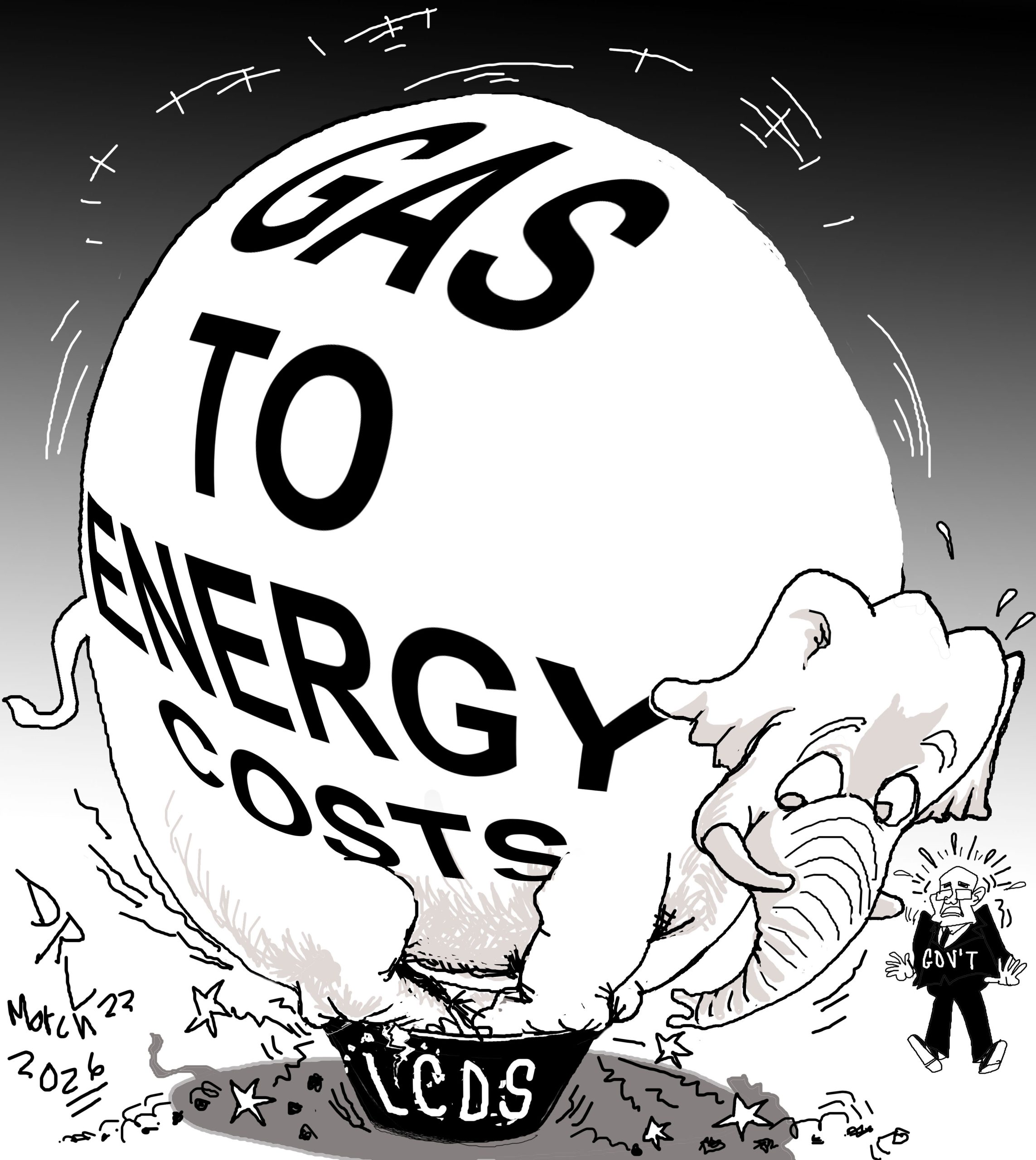
Your children are starving, and you giving away their food to an already fat pussycat.
Mar 28, 2026
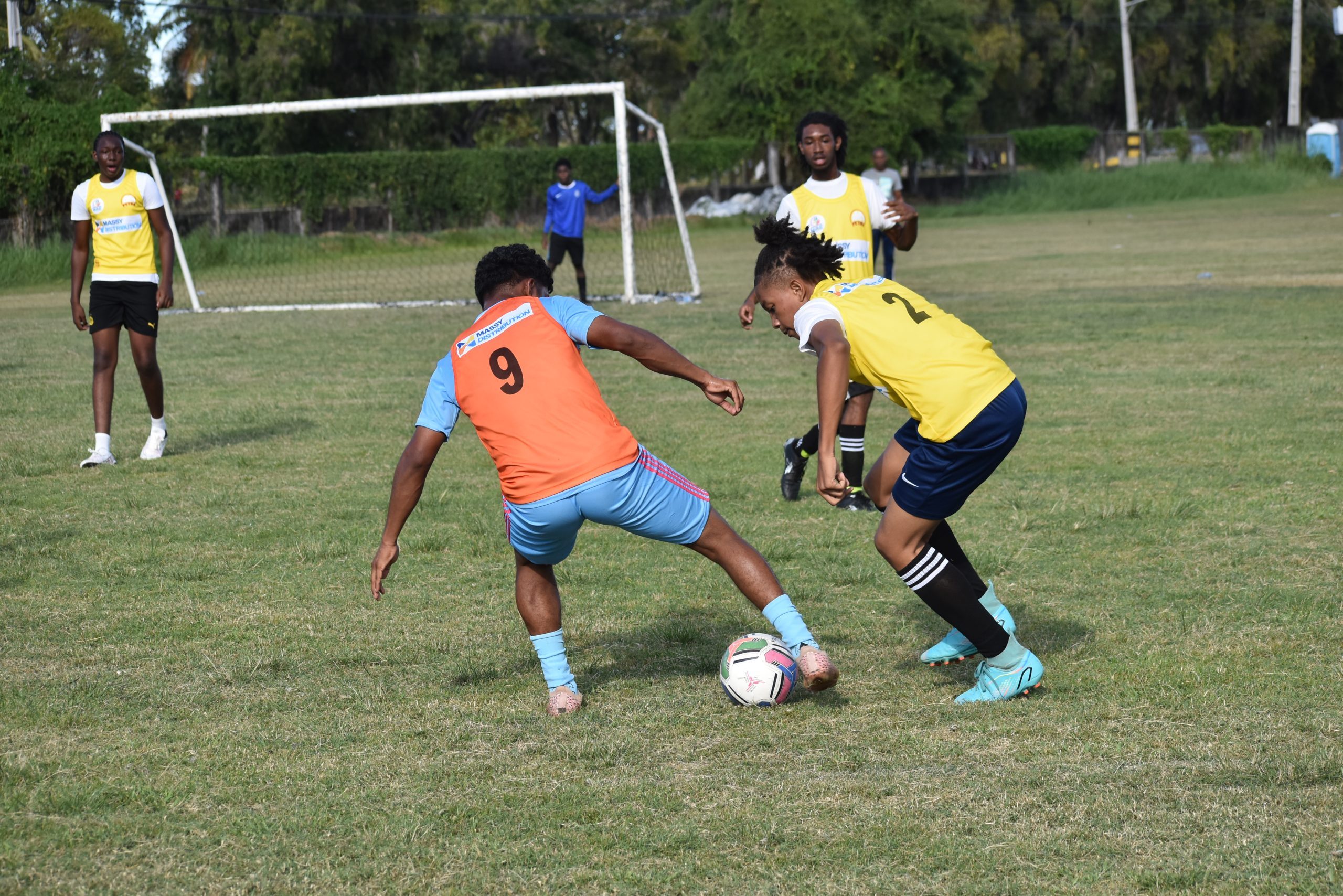
– Massy Distribution Schools U18 Football kick off round 2 action today Kaieteur Sports – The race for knockout qualification sharpens today as round two of the 12th Annual Massy...Mar 28, 2026
(Kaieteur News) – Vice President Bharrat Jagdeo arrived at the 124th Special Meeting of the Council for Trade and Economic Development (COTED) brandishing what he seemed to believe was a cudgel of hard truth: the Caribbean must move “from rhetoric to realism.” One almost admires his...Mar 22, 2026
By Sir Ronald Sanders (Kaieteur News) – The war in Iran is already at Caribbean doors. The attacks in Iran and the Gulf are being justified by some on the grounds that Iran’s record on terrorism, nuclear ambition, and regional meddling leaves the “free world” with no choice but to act...Mar 28, 2026
Hard Truths by GHK Lall (Kaieteur News) – The father-son Mohamed team heads to the CCJ. It’s honored as the apex court. Though impressive sounding, and deserving that loftiness, here’s something more visceral. Last Chance Chambers. Lose there, and it’s finished. Handcuffs...Freedom of speech is our core value at Kaieteur News. If the letter/e-mail you sent was not published, and you believe that its contents were not libellous, let us know, please contact us by phone or email.
Feel free to send us your comments and/or criticisms.
Contact: 624-6456; 225-8452; 225-8458; 225-8463; 225-8465; 225-8473 or 225-8491.
Or by Email: glennlall2000@gmail.com / kaieteurnews@yahoo.com