Latest update March 28th, 2026 12:30 AM

Sep 15, 2017 Letters
Dear Editor,
In three (3) previous letters on the subject, I have set the premise upon which we shall further explore the topic. Wolfensberger (1972) and Chapman and Adams (2002) argued that there is a collective conscience in society about what constitutes the good things of life. The power influencing society creates a collective desire of what constitute a good life. Some of these constituted good things in life are classified as: equal quality education experiences and opportunities, a home and family; friendship; being accorded dignity, respect, acceptance; a sense of belonging; and the development and exercise of one’s capacities; a voice in the affairs of one’s community and society; opportunities to participate; a decent material standard of living; and at least normative place to live; and opportunities for work and self-support.
As it relates to this article the good things in education will primarily focus on the learning experiences and opportunities learners with Special Education Needs (SEN) and/or disabilities received in mainstream education systems and its direct relation to their achievements. Wolfensberger (1980a) postulated that Social Role Valorization (SRV) is of extreme importance and relevance to persons in the society who are already socially devalued, and persons at the very risk of becoming devalued. This makes Social Role Valorization (SRV) of paramount importance to learners with Special Education Needs and/or disabilities in mainstream education systems where they are already devalued or at the precipice of becoming devalued. Within Guyana’s mainstream education system there are approximately 2.2 percent (N= 16500) of its approximately seven hundred and forty thousand population are at the precipice of being devalued in the mainstream education system.
Changing the perceived value of the social roles of learners with Special Education Needs and/or disabilities is called social role valorization, and doing so is role-valorizing. Within the mainstream education system of Guyana there are two open avenues to persistently seek to achieve social role valorization. Firstly, this can be done by the enhancement of the social image of learners with Special Education Needs (SEN) and/or disability within the mainstream education system. Secondly, persistent efforts must be made at enhancing the competencies of the learners with Special Education Needs and /or disabilities in the vastest possible ways. This will contribute towards changing the negative perceptions of the teachers and school’s culture.
By enhancing learners with Special Education Needs (SEN) and/or disabilities competences will reduce the challenges both the teacher and learners will face in mainstream education system. The enhancing of learners with Special Education Needs (SEN) and/or disabilities social roles is done in four distinct domains but most important of those domains in the individual. The individual’s primary social system is the family. Exploring the other domains such as the intermediate level social systems of an individual or group, such as the neighborhood, community, and services the person receives; the larger society of the individual or group, including the entire service system (Wolfensberger & Thomas, 1983, 1988).
The reality in society is that not all people are positively valued in by their fellow citizens and the society collectively. It therefore should be, the job of the school, teachers, other learners as well as the society to ensure that learners with Special Education Needs (SEN) and/or disabilities are valued in the society and by extension in the mainstream education system. The devaluation of learners with Special Education Needs (SEN and/or disabilities by the society and the mainstream education system contributed to make Social Role Valorization (SRV) so important. Through stimulating and rich learning experiences, learners with Special Education Needs (SEN) and/or disability can experience himself as an active agent in the mainstream education system and society. Normalization principle also means that the choices, wishes and desires of the learners with Special Education Needs (SEN) and/or disability have to be taken into consideration always and due recognition and respect must be given.
The normalization process of integrating or including learners with Special Education Needs (SEN) and/or disability in a mainstream education system, requires concerted effort to systematically incorporate into teaching and training materials the deepening understanding of what educational and social experiences are thinking, writing, and teaching about normalization over the years are likely to be successful with the group of learners. In addition, it also requires the increasing incorporation into actual human service practice in the mainstream schools followed up with numerous normalization-based service assessments, mostly using the PASS tool to gather empirical evidence of the achievements of learners with Special Education Needs (SEN) and/or disability in the mainstream education system.
Wolfensberger and Tullman (1982) distinctly specified that the normalization principle also implies a normal routine of life for learners with Special Education Needs (SEN) and/or disability within the mainstream education system. Finally, normalization also means an opportunity to undergo normal developmental experiences of the life cycle wherever the learners with Special Education Needs (SEN) and/or disability are placed to be given the experiences of the life cycle. Unsupported attempts at normalizing the human experiences for learners with Special Education Needs (SEN) and/or disabilities in Guyana’s mainstream is a futile effort at enhancing the value placed on learners with Special Education Needs (SEN) by society, school other learners and what they placed on themselves.
In order to fully utilize Social Role Valorization (SRV) in mainstream education there must be full support from all stakeholders. There must be the supportive structures within the school’s culture and from the teachers. There must be the use of differentiated instruction and support so that learners with Special Education Needs (SEN) and/or disabilities to illustrate their strengths and help them conquer their weaknesses. Furthermore, in developing countries such as Guyana; it is very difficult, even impossible, to obtain reliable and recent data to support integration or inclusion in an attempt at normalization through Social Role Valorization (SRV)
Lidon Lashley
University of Guyana
Tr. Cert., B.Ed., M.Ed., M.A.SEN
Subscribe to get the latest posts sent to your email.
Your children are starving, and you giving away their food to an already fat pussycat.
Mar 28, 2026
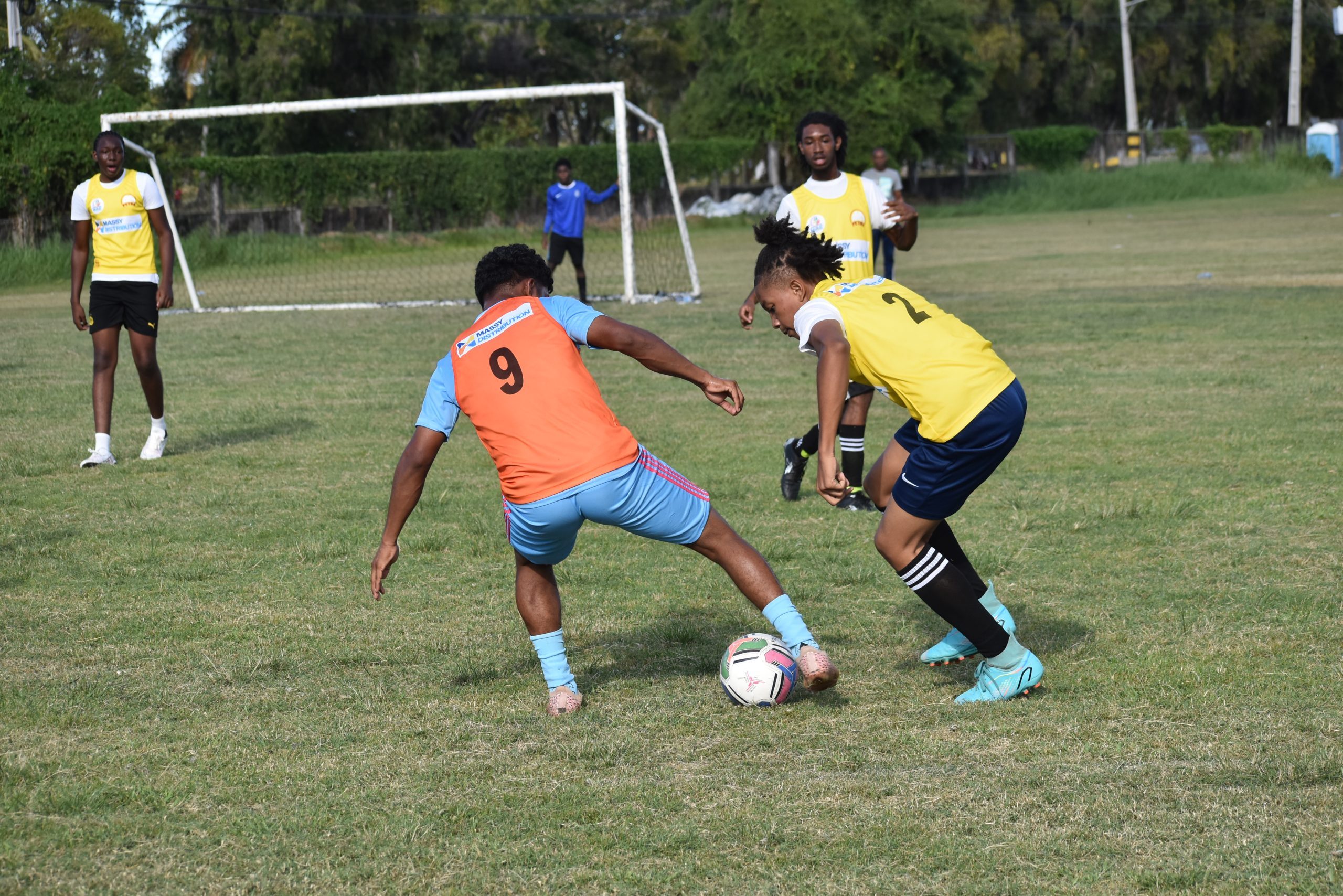
– Massy Distribution Schools U18 Football kick off round 2 action today Kaieteur Sports – The race for knockout qualification sharpens today as round two of the 12th Annual Massy...Mar 28, 2026
(Kaieteur News) – Vice President Bharrat Jagdeo arrived at the 124th Special Meeting of the Council for Trade and Economic Development (COTED) brandishing what he seemed to believe was a cudgel of hard truth: the Caribbean must move “from rhetoric to realism.” One almost admires his...Mar 22, 2026
By Sir Ronald Sanders (Kaieteur News) – The war in Iran is already at Caribbean doors. The attacks in Iran and the Gulf are being justified by some on the grounds that Iran’s record on terrorism, nuclear ambition, and regional meddling leaves the “free world” with no choice but to act...Mar 28, 2026
Hard Truths by GHK Lall (Kaieteur News) – The father-son Mohamed team heads to the CCJ. It’s honored as the apex court. Though impressive sounding, and deserving that loftiness, here’s something more visceral. Last Chance Chambers. Lose there, and it’s finished. Handcuffs...Freedom of speech is our core value at Kaieteur News. If the letter/e-mail you sent was not published, and you believe that its contents were not libellous, let us know, please contact us by phone or email.
Feel free to send us your comments and/or criticisms.
Contact: 624-6456; 225-8452; 225-8458; 225-8463; 225-8465; 225-8473 or 225-8491.
Or by Email: glennlall2000@gmail.com / kaieteurnews@yahoo.com